




The FIA guarantees customer Formula 1 teams access to the same power unit specification as the works’ outfit, but the complexity of the 2026 systems has placed experience at the forefront.
This is witnessed in the McLaren case with its engine partner Mercedes, where the real difference no longer lies in the hardware, but in how effectively it is exploited.
Throughout F1 history, being a works’ team has always brought advantages yet there have been occasions in which customer squads have won the world championship from McLaren the past two years, Brawn in 2009, and Red Bull during its title years alongside Renault.
And during the hybrid power unit era, the FIA introduced a technical regulation requiring manufacturers to supply customer teams with the same engine specification used by the works outfit, ensuring equal treatment in terms of hardware and potential performance.
In recent years, that rule has rarely been the subject of controversy. As development matured, power units became almost transparent in the overall performance picture, with technical evolution reducing the differences between manufacturers to a minimum.
But the arrival of the new technical era has changed that landscape – not only between different engine suppliers, but also in the relationship between manufacturers and their customer teams.
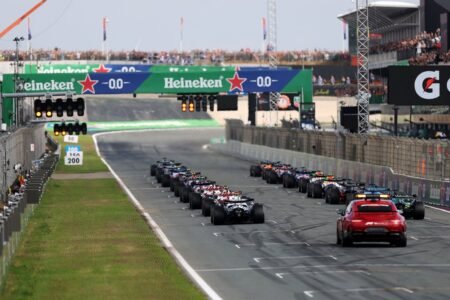
Start action
Photo by: Liam Fabre
The increased role of the MGU-K has made energy management a decisive performance factor, relying on software systems that are significantly more sophisticated than those used until last season.
The framework governing engine supply has not changed. Every customer team still has manufacturer engineers embedded in its garage, but responsibility for optimising the power unit remains with the team itself.
A supplier can answer technical questions and provide support, but it cannot guide the customer through the pursuit of performance in the way that naturally happens within the factory team.
McLaren has become the clearest example of this new dynamic and performance is also influenced by gearbox ratio selection, something Mercedes has consistently emphasised and McLaren has never attempted to hide.
However, it should also be remembered that the gearbox ratios chosen last winter were defined around the power curve of the engine specification available at the time. According to McLaren team principal Andrea Stella though, there is more to the story as he reckons the deficit his side currently faces cannot be attributed solely to the car itself.
Speaking at Silverstone during last weekend’s British Grand Prix, he said: “It’s a circuit where there’s an important starvation from an energy point of view and power unit exploitation and power unit performance is particularly important.

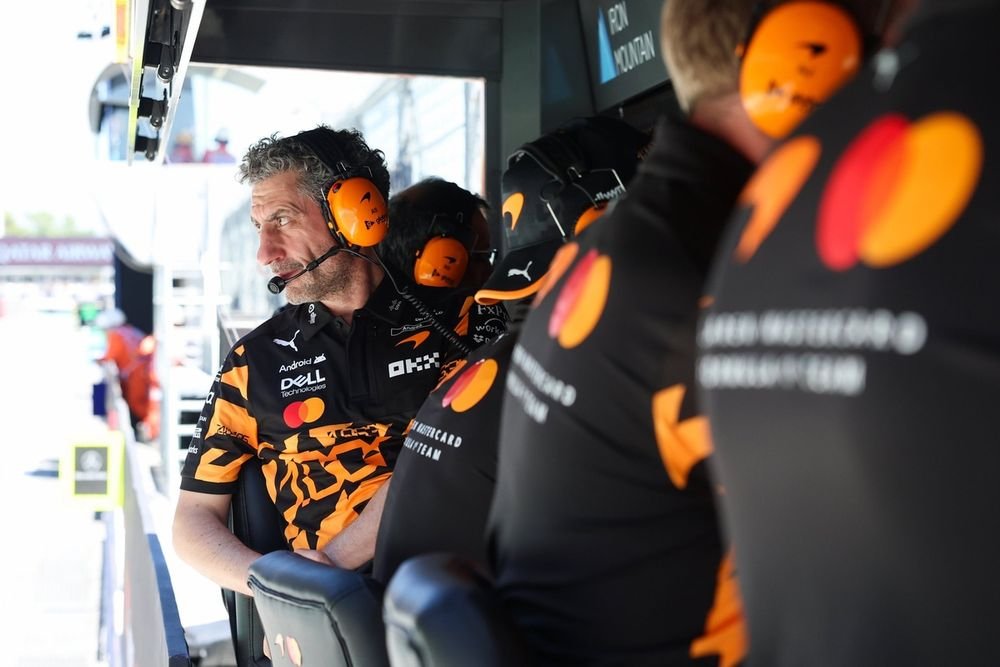
Andrea Stella, McLaren
Photo by: Steven Tee / LAT Images via Getty Images
“I have to say, and I said that other times, that we still seem to have a little bit of a deficit in extracting the most from the HPP power unit. So, I think we have the three, four tenths that we have because we are behind in terms of development of our car.
“We need to add the fact that the conditions were difficult and if anything, in these conditions, we seem to be having even more of a gap in the corners. Plus, the exploitation of the power unit on which we seem to be having a bit of a deficit.
“If you look at the GPS overlays, it becomes apparent that somehow we need to keep our conversation open with HPP, because there’s some performance we seem to be leaving behind.”
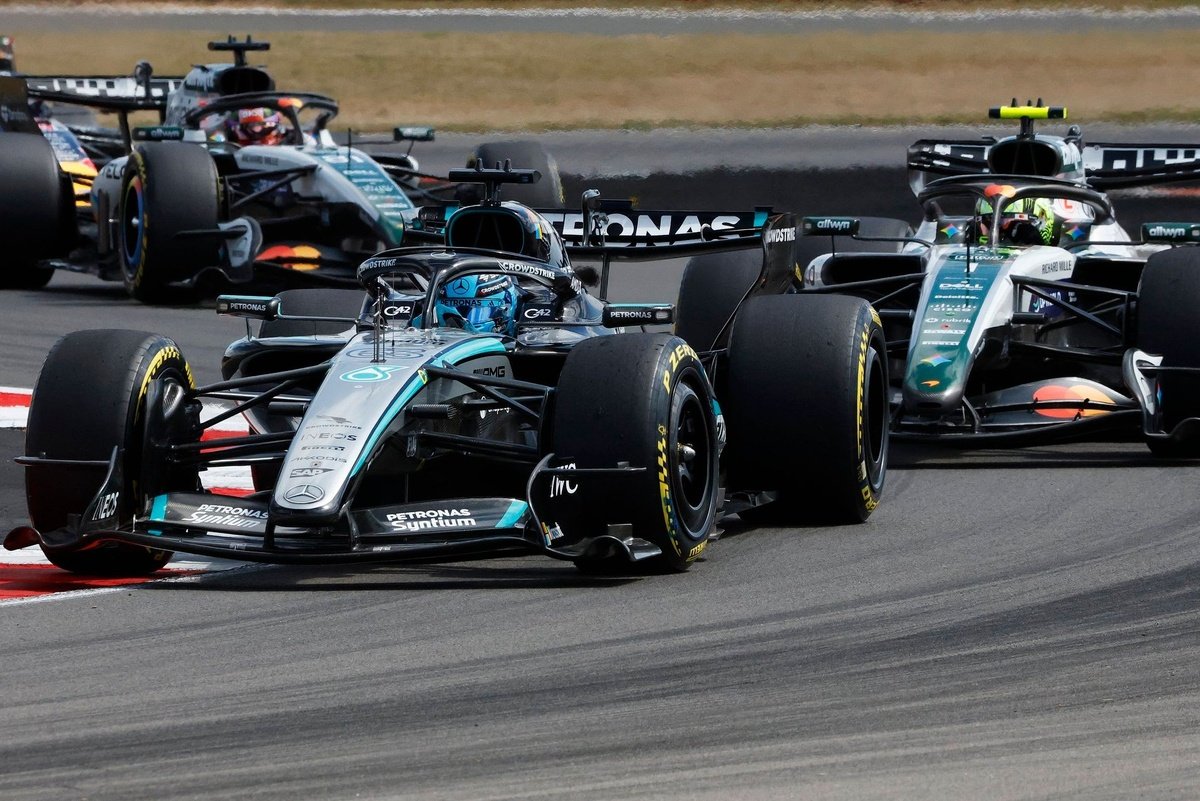
Attention also focused on a Mercedes qualifying feature that emerged from the telemetry, showing both George Russell and Kimi Antonelli briefly lifting off the throttle just before crossing the finish line.
“Once we saw it yesterday in the sprint qualifying applied by Antonelli, kind of surprised us a little bit,” he added, “because it’s not something that we discussed and nor I’m sure at all that is available to us because it requires probably some further elements, let’s say, to use the power unit.
“So, like I’ve said before, there’s definitely conversations ongoing with HPP at technical level to make sure that we use what is available in this power unit, which is brilliant. It’s a really great piece of technology.”
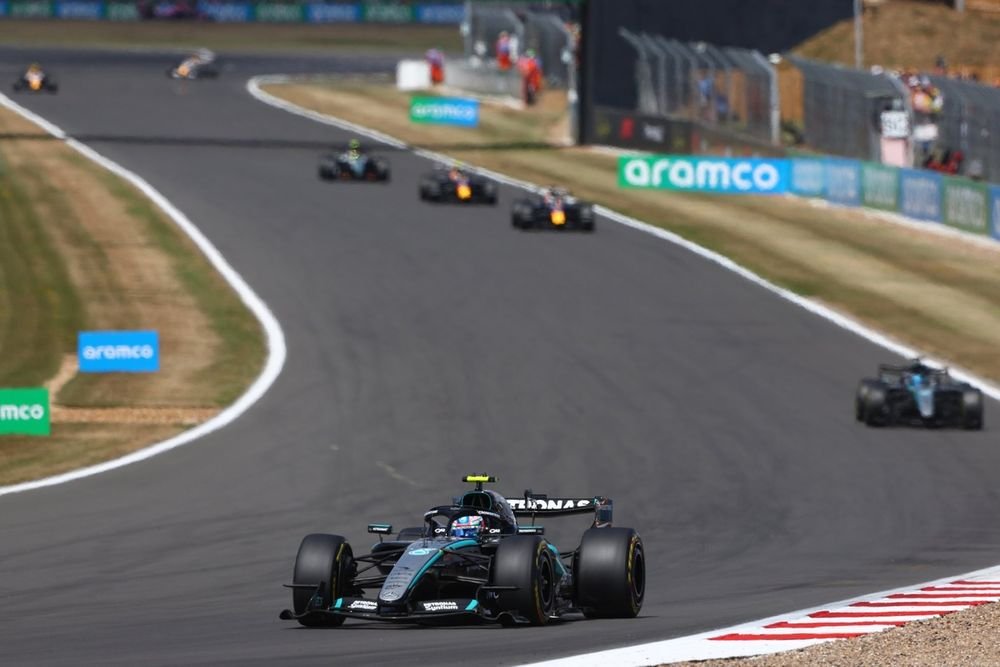
Andrea Kimi Antonelli, Mercedes
Photo by: Andy Hone/ LAT Images via Getty Images
Stella also confirmed that McLaren is waiting to receive the latest Mercedes specification. “We are now waiting to see if we can upgrade our specification and if this helps exploitation somehow,” said the Italian.
“It should be just a reliability upgrade, so I’m not sure that’s the case. But definitely there’s some other factors that we need to keep discussing with HPP because when we look at the performance in the straights, even taking into account the fact that they may have less drag, there’s still some question mark.”
So the new generation of power units has brought back into focus an aspect that many believed had become irrelevant. The regulations continue to guarantee customer teams access to the same hardware specification used by the works’ team, but they cannot legislate for the know-how required to exploit that hardware to its full potential.
In modern F1, the advantage enjoyed by a works’ team is no longer defined simply by access to the engine itself. Increasingly, it lies in the expertise accumulated through developing, calibrating and managing a more sophisticated technology.
It is an advantage that cannot be measured on a dyno, but one that can become decisive whenever extracting the final few tenths from a power unit makes the difference.
We want to hear from you!
Let us know what you would like to see from us in the future.
Take our survey
– The Autosport.com Team
Read the full article here