




Formula 1’s 2026 revolution has undeniably divided the paddock, especially engine-wise, and the new power units have significantly changed the required driving style.
While the overall response to the chassis has been positive, with lighter, nimbler cars, the main issue has been the management of electrical energy.
The opening Bahrain pre-season test has revealed the different approaches each power unit manufacturer has made to battery management, including using lower gears in corners.
Teams need to find a way to let drivers know whether the hybrid is harvesting or delivering energy. In the 2014-25 hybrid era, a dedicated indicator on the steering wheel displayed the amount of energy remaining in the battery, which could make the difference when preparing for a qualifying lap or in wheel-to-wheel combat.
So, until last year, the charging phase was much less invasive: on the one hand, the now-abandoned MGU-H contributed significantly to harvesting, and on the other, the MGU-K was much smaller with more limited energy deployment.
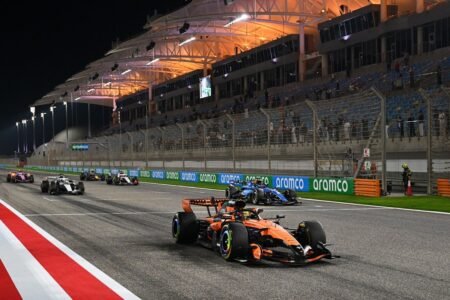
Oscar Piastri, McLaren
Foto di: AG Photo
But the MGU-K has now tripled in power, and the charging process has become much more noticeable, with the power unit able to harvest energy during lift-and-coast or even in corners.
But with the absence of the H-motor generator, it has made the charging process much more noticeable while driving. In some corners like Bahrain’s Turn 12, drivers rely solely on the internal combustion engine in order to save energy for the following straights.
Drivers obviously prepare for this on the simulator, but having an additional reference can be invaluable.
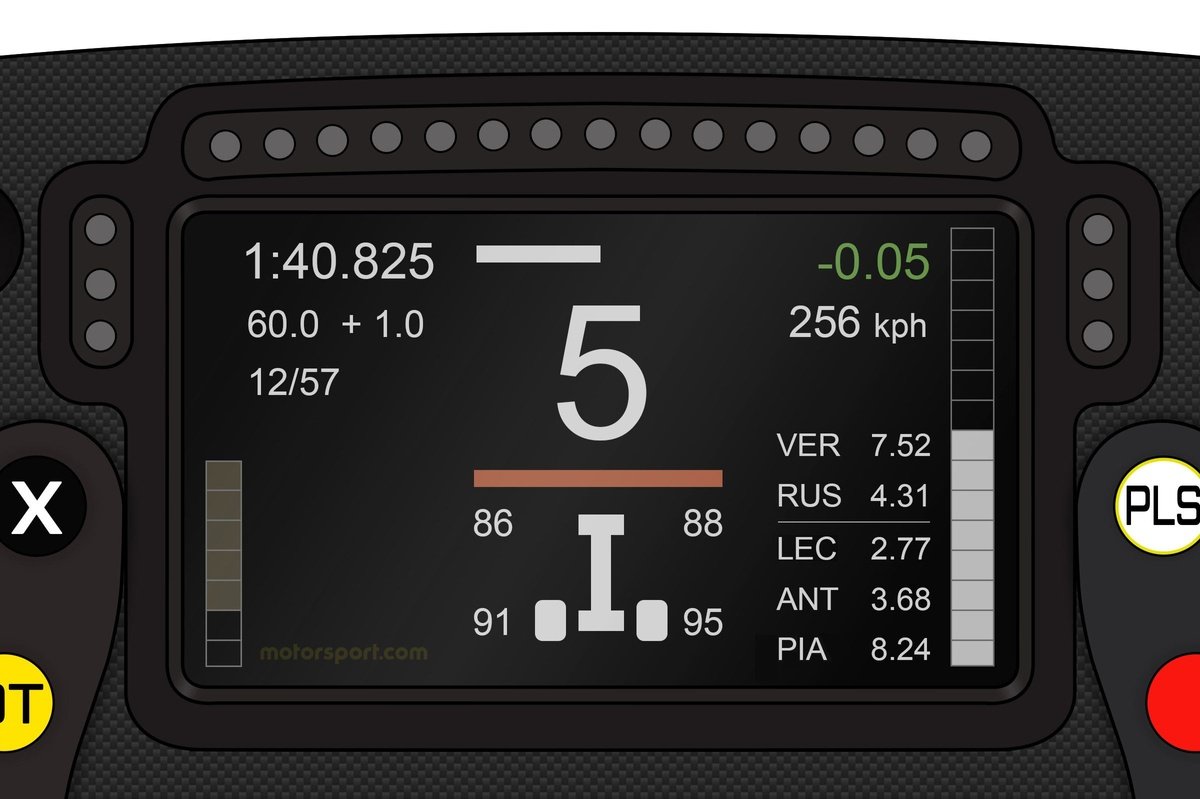
That’s why McLaren has opted for an even more detailed approach, which stands out from the pack. Most teams have retained the indicator on the steering wheel – often a coloured bar – which visually displays how much energy is left in the battery in real time.

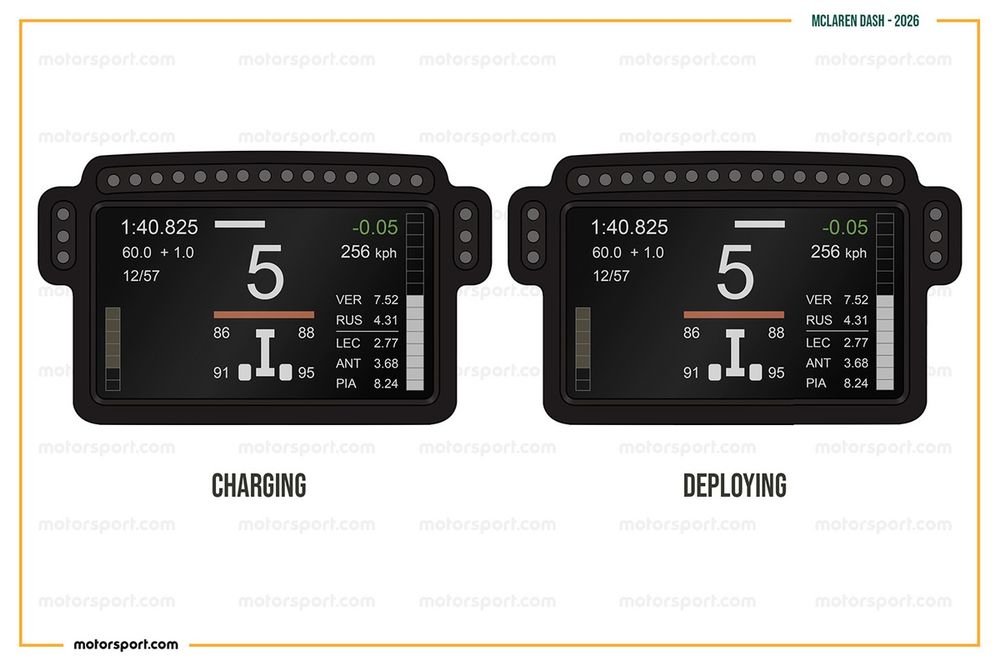
McLaren’s steering wheel when harvesting vs when deploying energy
Photo by: Gianluca D’Alessandro
In addition to the traditional bar, the MCL40’s steering wheel features a second system, located above the gear indicator, designed to show Lando Norris and Oscar Piastri how the MGU-K is working.
If the bar extends from the centre to the right-hand side, it means the MGU-K is active and releasing energy. Conversely, when the bar moves from the centre to the left-hand side – typically under braking, in slow corners or when lifting and coasting – the MGU-K is harvesting energy.
The indicator does not work in a binary manner, as the bar also gradually shows when the MGU-K enters the derating phase, gradually reducing output before stopping it or switching to harvesting.
In the aforementioned sections where the MGU-K is inactive, like Bahrain’s Turn 12, the bar on the steering wheel disappears, signalling to the driver that only the internal combustion engine is working.
We want to hear from you!
Let us know what you would like to see from us in the future.
Take our survey
– The Autosport.com Team
Read the full article here