


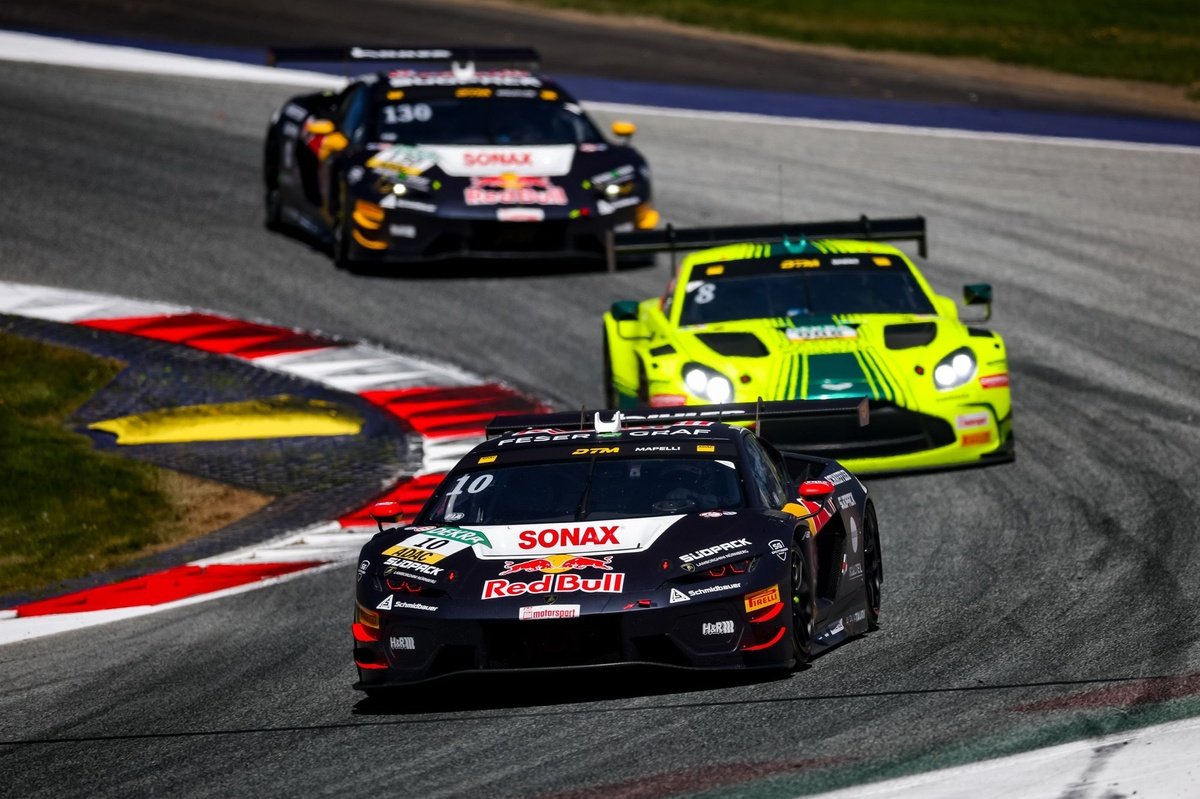
It’s exactly 20 years since the FIA GT3 Championship heralded a new era of sportscar racing. As a packed grid of 44 cars lined up at the Silverstone Circuit in 2006, few could have imagined the scale of success this category would go on to enjoy.
After all, this was a time when the sportscar racing landscape was highly fragmented and transitional. The World Endurance Championship was still six years away from being reborn, GT1 had collapsed under its own weight, while GT2 (which eventually became GTE) was too factory-oriented for mass adoption.
As such, Stephane Ratel conceived GT3 as a customer-focused category aimed at making high-level GT racing accessible to private teams and gentleman drivers. The focus was on affordability, controlled performance and giving specialist tuners the freedom to turn road-going machines into proper race cars.
What Ratel couldn’t have envisioned was how it would become the default platform for modern-day sportscar racing.
While the GT1 platform officially died (a second time) in 2012 and even GTE was phased out after 2023, GT3 became the only category versatile enough to replace them all. Today, it underpins various series and events ranging from the World Endurance Championship and SRO’s own GT World Challenge, to regional series like the DTM and British GT.
Perhaps even more surprising is how the category evolved beyond its gentleman-driver roots, with factory-backed stars now regularly sharing the same cars with amateur racers.
Ratel says he was always confident that GT3 had strong foundations, but he even admits to being surprised by how far it has grown.
Stephane Ratel launched GT3 20 years ago
Photo by: SRO
“It didn’t come overnight because it’s over 30 years of a deep involvement in GT racing and 20 years in GT3,” he said about GT3’s growth in an interview with Autosport.
“But it’s been constant growth. It has been going better and better for many years.
“It’s 20 years since the very first race at Silverstone, which was in May 2006, and there were 44 cars at the start.
“And in a similar sprint format this year, we have 44-45 cars in GT World Sprint Cup in Europe. So, it just started with a boom and it stayed with a boom in SRO series, and then it spread all over the world.
“We did some research for this 20-year anniversary, and I found one of the first interviews I did in 2005 when we presented [the category]. I already had extensive experience in GT racing, and I believed the fundamentals were right, because the cars were spectacular enough, fast enough, and very cost effective. And at the end in motorsport, cost is a key factor.
“At the time, I said in this interview that I was seeing a bright future for the category. It went over my wildest expectations. Not only it had a bright future with SRO, because it became the backbone of our racing series, but it also conquered the rest of the sportscar world, because it first replaced both GT1 and GT2 with the FIA, it replaced GTE with the ACO and IMSA, and ultimately, it even replaced touring cars with the DTM.
“So, it’s a world conqueror. That, of course, I couldn’t have anticipated initially.”
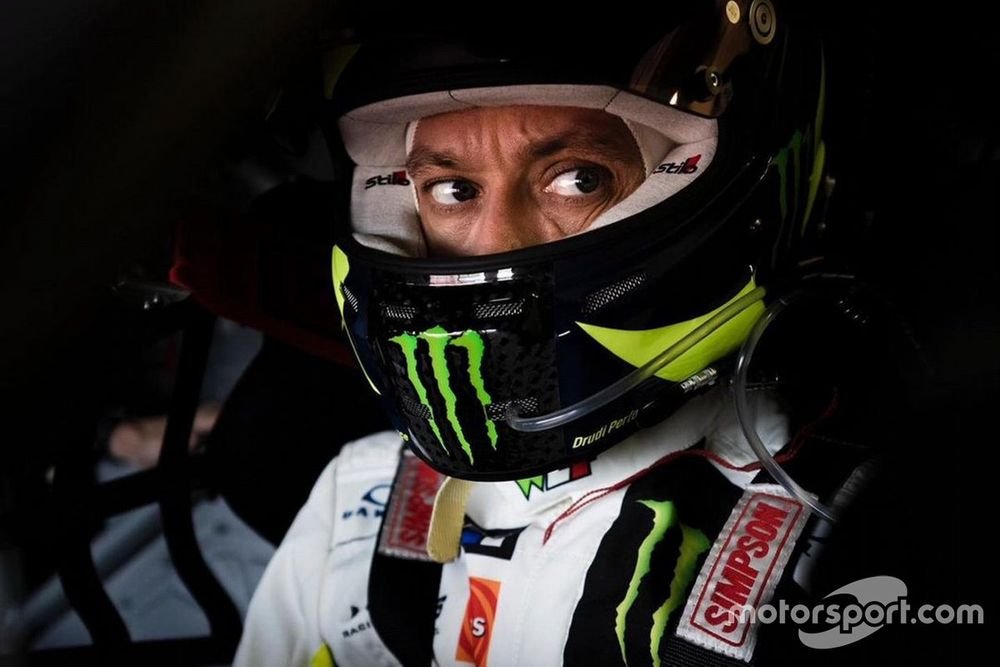
Valentino Rossi brought new fans to GT racing
Photo by: Valentino Rossi
“Rossi has been hugely important”
GT3 racing has always attracted big names from other disciplines, but the entry of MotoGP legend Valentino Rossi and four-time Formula 1 champion Max Verstappen has introduced the category to an entirely new audience.
Ratel takes satisfaction from the fact that fans who attended GTWCE events just to follow Rossi were impressed by what they saw, and stayed afterwards.
“Valentino Rossi has been hugely important,” he said. “We saw a really very substantial increase in spectator attendance. Valentino’s fans came to the GT race, and loved it and stayed.
“Monza had a huge boom in spectator attendance when Valentino arrived. Last year, he left us for a season to do mainly WEC, and you could see the attendance that remained the same. So, the fans that came initially for Valentino remained for GT racing.”
A similar effect was seen at the Nurburgring 24 Hours this month, as Verstappen’s debut led to a record attendance of 352,000 spectators across the race weekend.
Ratel previously stated that a desire to make a difference in a level-playing field is what drew the Dutchman to GT3 racing, despite the obvious performance difference to F1 cars.
Niche within a niche
GT3 cars now underpin all major endurance races, including the 24-hour fixtures at Le Mans, Daytona, Nurburgring and Spa, as well as other events such as the Bathurst 12 Hour.
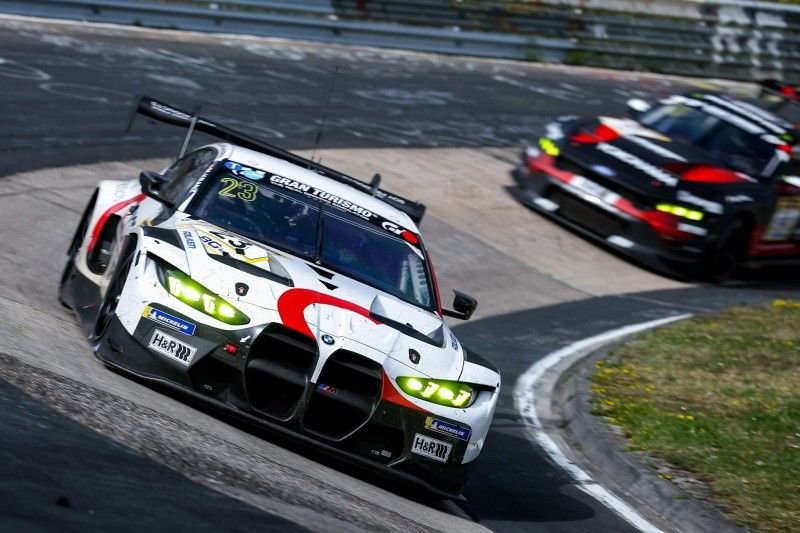
GT3 cars star in events at famous tracks like Spa, Le Mans and the Nurburgring
Photo by: VLN
Yet despite its growth, GT3 racing still occupies a relatively niche space within the wider motorsport landscape. And while some events such as the Le Mans 24 Hours continue to attract huge crowds and mainstream attention, promoters face a greater challenge in sustaining the same level of interest across the entire season.
It’s a problem faced not only by the FIA and the ACO with the WEC, but SRO with its own championships run under the GT World Challenge banner.
Ratel is under no illusions about GT3’s position, particularly compared to F1, whose popularity has exploded under current owner Liberty Media.
Asked how GTWCE could have a broader appeal, Ratel said: “Yes, [it is a niche] but a growing niche.
“When you see the combination of WEC today with eight major manufacturers, when you look at the public attendance at Imola for the first round of the season, if you look at the public attendance that GT World Challenge had at Paul Ricard for the first round, or at Brands Hatch, it is a growing niche and a fast growing niche.
“Of course, for the general public, if we can compare it to Formula 1, it is on a different planet. But in motorsports, in pure motorsport, sports car racing is really having a very significant time.”
We want to hear from you!
Let us know what you would like to see from us in the future.
Take our survey
– The Autosport.com Team
Read the full article here