




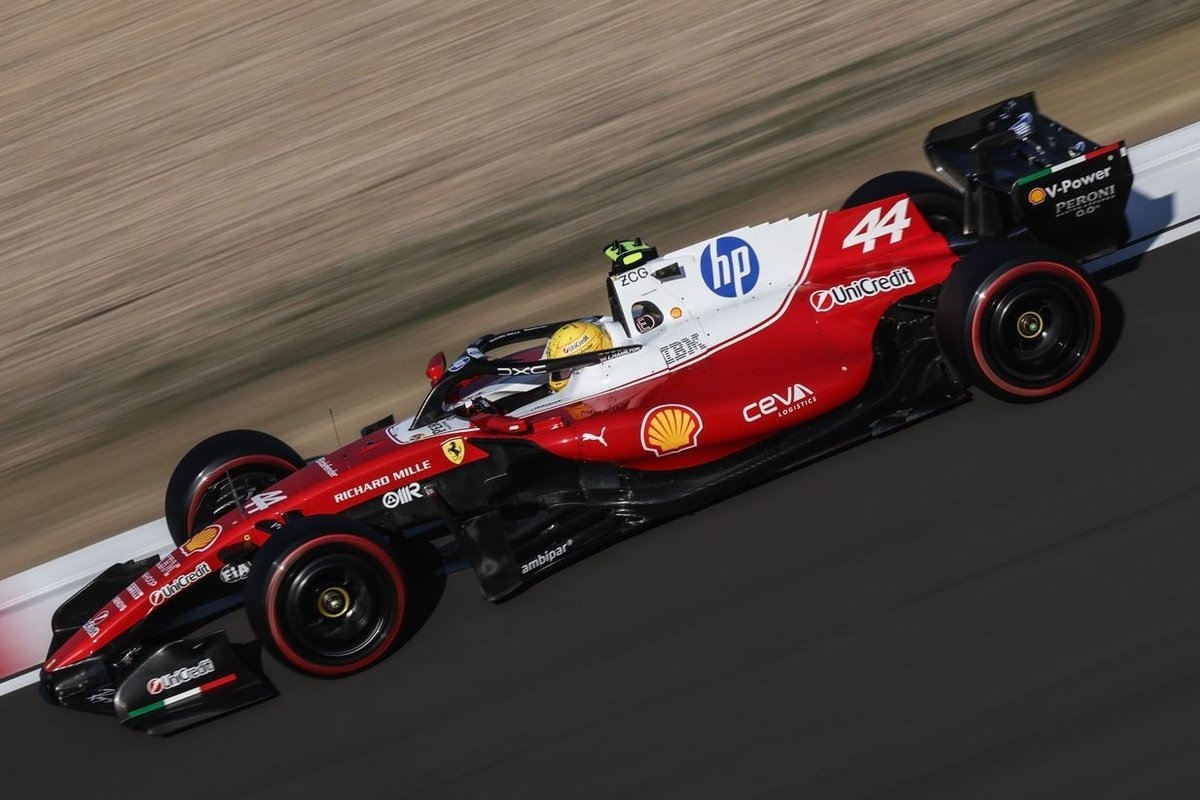
Ferrari, considered the only real alternative to Mercedes in the fight at the front, has prepared for the third race of the Formula 1 season in Japan with significant work carried out back at the factory after analysing the data collected from the first two grands prix.
The Suzuka circuit represents a third different type of track of the season and is expected to be a challenging venue for battery recharging, though not as demanding as Melbourne. In addition, the complete resurfacing of the track and the weather conditions – forecasted to be cold and wet – are unknowns that could reshuffle simulation data.
At Maranello, Ferrari has done its homework to exploit more of the SF-26’s potential. So far, simulations are giving positive signals, but it is clear that progress is being measured internally, without a true comparison to rivals – Mercedes above all.
It is no secret that Ferrari is very competitive in technical, twisty track sections, while it struggles on long straights where Mercedes can exploit greater high-end power from its internal combustion engine to help recharge electrical energy. The Silver Arrows burn fuel to recharge the battery, accepting a drop in speed due to super clipping that is significantly less severe than its rivals.
Without even considering the advantages that may come from a compression ratio that can exceed 16:1 when hot, the Brixworth-built V6 has demonstrated clear superiority in fast sections.
Ferrari believes it can achieve better energy distribution over the lap, but the idea is not so much to chase the W17 on its own terms as to push its own concepts to the extreme, exploiting the potential of its smaller turbo.
The Scuderia aims to maximise energy harvesting in slower sections and during transitions, possibly using a lower gear in certain situations to keep engine revs high: Enrico Gualtieri’s engine department is trying to optimise the qualities of the 067/6 power unit, aware that the fine setup to extract all available power has not yet been fully found.
Although no complaints are emerging from the sporting management, it is fair to wonder whether Shell has managed to produce a fuel clean enough to match the Petronas fuel developed for the four Mercedes-powered teams.
Charles Leclerc, Ferrari, Lewis Hamilton, Ferrari
Photo by: Lars Baron / Getty Images
Ferrari is also extremely busy on the aerodynamic front: testing with the “Macarena” wing has continued at the factory. The rotating wing was only seen in China during a single free practice session, and it is very likely that it will appear again in Japan.
So why is there hesitation in using a solution that guarantees higher top speed at the speed trap? In Shanghai, the drivers complained about instability in the car’s balance during the closing phase of the flip-up wing, making the already delicate braking phase more difficult. In Maranello, various options have been studied to find the most effective setup in search of the balance required on a demanding track like Suzuka.
Experimentation has therefore not only focused on the opening and closing timing of the Macarena wing, but aerodynamic engineers have also worked on front flap adjustments to achieve balance. These are parameters that cannot be measured in the wind tunnel, especially since reliability assessments of the system are also ongoing.
The aerodynamic benefits are clear when the wing is open, while those when it is closed can still be improved. But these advantages must outweigh the drawbacks: with two actuators mounted in the side plates to eliminate the central one that creates drag, there is an inevitable increase in weight.
What’s more, the SF-26 still needs to undergo a weight reduction program to shed six to seven kilograms of excess mass. What we’ve seen so far is only a first-stage version of the Macarena wing, as a more sophisticated concept is also being developed – one that could allow different closing times depending on the corners the car is facing.

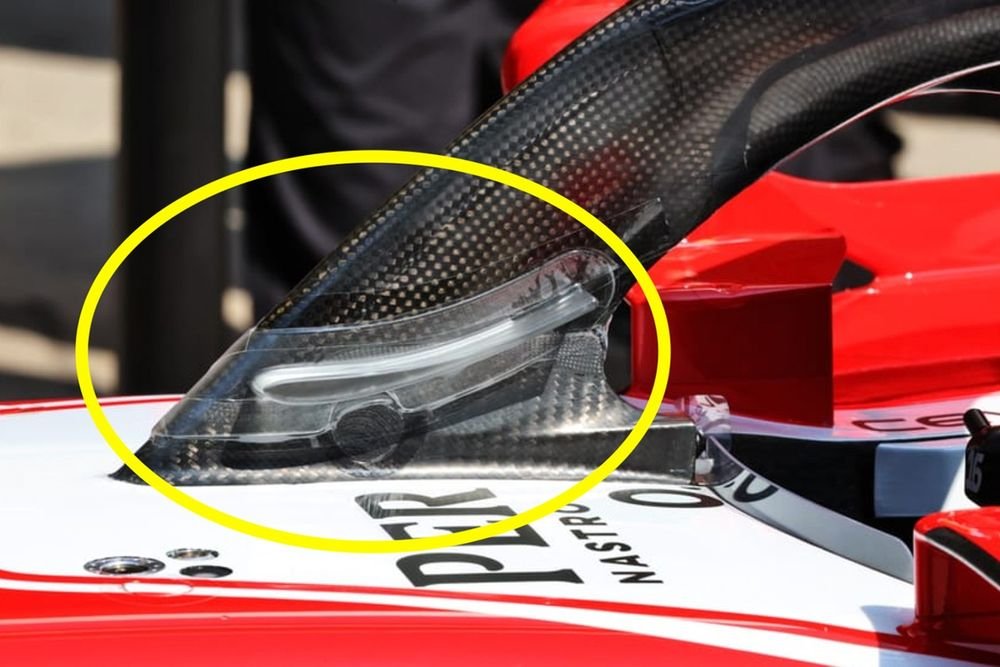
Ferrari SF-26: Will the windscreen flap return on the Halo?
We are only at the beginning of the development phase in Formula 1’s new era, and we will need to get used to cars changing appearance over the course of the season. It is also very likely that the small plastic fin seen on the Halo support in China up to the sprint race – then removed to avoid controversy – could return.
Since its declared function was that of a windscreen, doubts arose that the profile might create visibility issues for drivers. A revised version (perhaps more transparent) may be introduced to address concerns from the FIA and rival teams, who were ready to lodge a protest.
Ferrari, in short, is not giving in to the clear superiority of the Silver Arrows: Japan will indicate whether the chosen development path is the right one. After that, there will be a month-long break due to the cancellation of races in Bahrain and Jeddah, where Ferrari will try to close the gap.
We want to hear from you!
Let us know what you would like to see from us in the future.
Take our survey
– The Autosport.com Team
Read the full article here