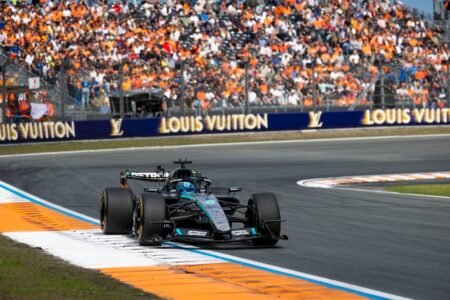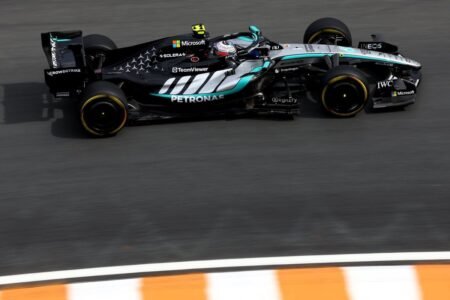





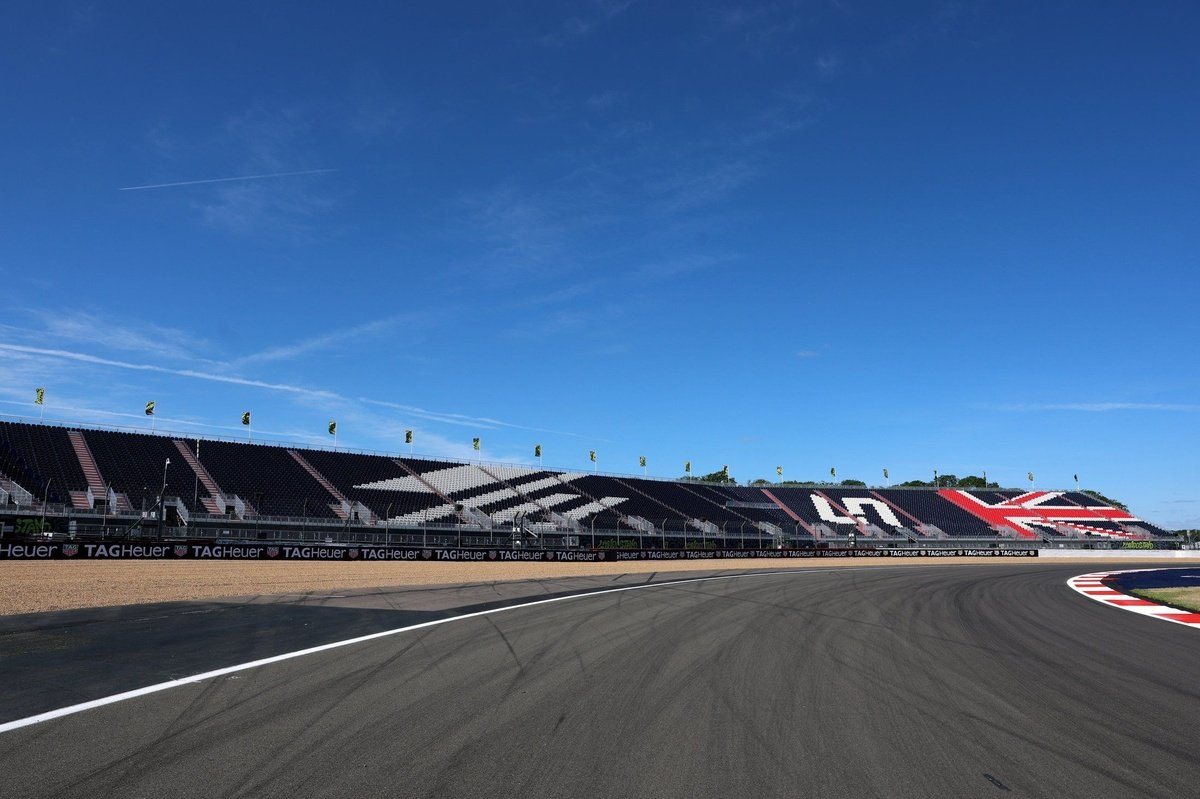
If you thought Formula 1’s favourite water cooler topic of energy management had gone away because of the band-aid fixes applied in Miami and the bigger changes agreed for 2027, then think again.
Recent races at circuits where cars were less energy limited had perhaps put vexatious talk of energy management on the backburner. But the iconic Silverstone circuit has been labelled the “biggest test” of this ruleset by Sergio Perez, with Max Verstappen saying he had to laugh while trying the circuit on the simulator with this era of cars, and not out of sheer delight.
At the heart lies the dichotomy underpinning the current version of the regulations. The circuits that drivers love the most – fast, flowing, an emphasis on high-speed over low-speed – happen to be the most problematic ones for energy management.
The 2026 power units with their current hybrid component need significant braking zones for drivers to recharge their battery. But Silverstone, one of the circuits with the highest on-throttle percentage of the entire calendar, has rather few of those and plenty of high-speed corners that will have to be used as “charging stations” for the long straights that follow, as Fernando Alonso described it.
Will some of the drivers’ favourite corners on the calendar – evocative names like Copse, Maggotts, Becketts and Stowe – now be completely ruined this year? Here’s what is really going on this weekend.
What is really going to be different about Silverstone, and what isn’t
The biggest pain point of these regulations is uncovered when cars have to cover a significant distance without having the opportunity to harvest energy under braking, whether in a straight line or in a high-speed corner where significant braking isn’t required. That’s what led to the phenomenon of super clipping, where cars charge the battery against the engine on the straight, while staying on full throttle. That has largely disappeared in qualifying thanks to some energy tweaks, but Silverstone is probably the most extreme example yet.
Silverstone map
Photo by: Uncredited
Looking specifically at the Northamptonshire circuit, there are two main areas where drivers will have to compromise their corners to optimise their overall lap time. The first one comes right at the start of the lap, when cars would normally hurtle flat-out through Turns 1 and 2 before jumping on the brakes into the tight Turn 3 right-hander.
That won’t be the case anymore this weekend. Cars are expected to start clipping through the first couple of kinks instead, because the upcoming Wellington straight between Turn 5 and 6 is one of the areas where having juice in the battery will be key to optimising the overall lap time.
A welcome charging opportunity follows in Brooklands, before cars head towards the fearsome Copse corner. Last year, polesitter Lando Norris took the right-hander flat-out at over 300km/h, with fears that the corner will now be neutered as corner speeds plummet. Sources suggest, however, that Copse will still be largely flat-out in qualifying.
On exit, cars are even expected to re-deploy energy before heading to Maggotts and Becketts. This is the second area where 2026’s class of cars will look noticeably different, with the snaking series of direction changes now used to recharge the battery. Again, this is a compromise necessitated by the following Hangar Straight. Deploying at the start of the straight and getting up to terminal velocity as quickly as possible is crucial towards overall lap time.
Cars must have built up charge in their relatively low-capacity batteries to be able to do this, and the lack of braking between Luffield and Stowe means something will have to give. In this case, Maggotts and Becketts are going to be the sacrificial lamb, which is why drivers have been so glum about this weekend. Pushing too hard through their favourite corner complex may actually be detrimental to overall lap time, because it means drivers will run out of energy too quickly on the straight.
Corner speeds are also expected to be much slower through Stowe, although this is understood to be more down to the lower downforce levels of the 2026 cars than a strict energy management limitation.

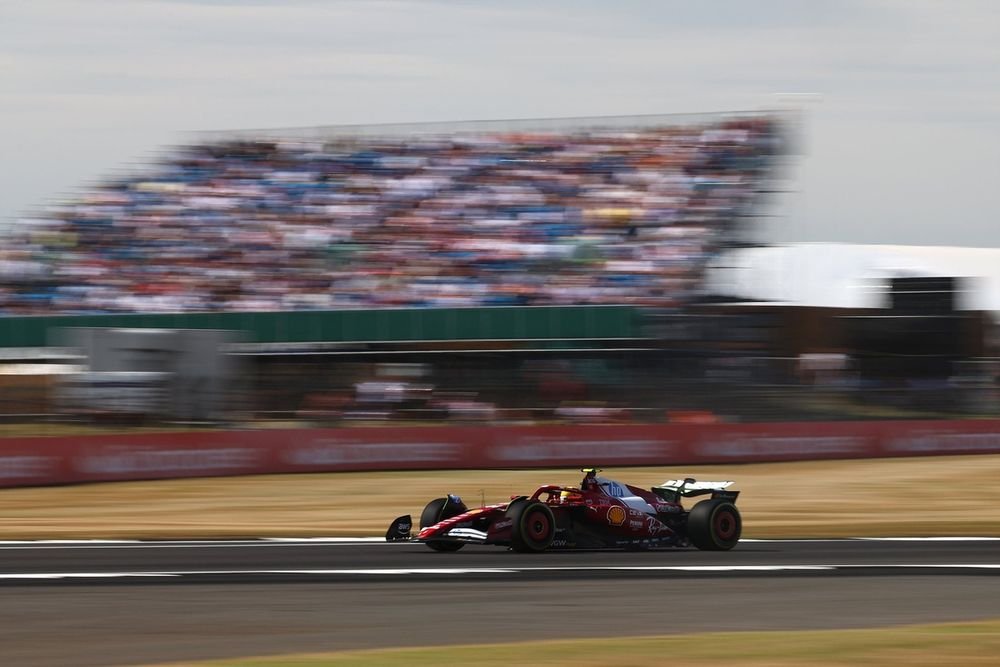
Lewis Hamilton, Ferrari
Photo by: Colin McMaster / LAT Images via Getty Images
FIA lowers energy limits
In a bid to avoid the worst side-effect of these regulations, the FIA has taken a conservative route with the maximum energy deployment limits for this weekend. It is understood the deployment limit has been set to 8MJ for the race and 6.5MJ for qualifying. In both instances this is 0.5MJ lower than Barcelona.
Despite this reduction, cars will still be expected to face super clipping at the end of the longest straights, although the situation will be less severe than it would have been without the Miami rule tweaks.
Is yo-yo racing back?
Teams have been gradually converging to very similar deployment profiles in recent events to chase lap time in qualifying. In the race, however, there is a tactical aspect to energy deployment in which drivers may try alternate profiles to try and overtake the cars ahead. Tyre management is expected to be much less severe than at last week’s Austrian Grand Prix, so there will be a bigger reliance on the power unit to try and find a way past.
Because of how energy-poor the cars are on this circuit, there is a very real possibility drivers will be enticed to deploy energy on one straight only to be a sitting duck on the next and be re-passed, a phenomenon which has been dubbed as yo-yo racing this year.
Is that a good or a bad thing? Some fans will find it artificial, while others will prefer seeing on-track action over the alternative. At a circuit with limited tyre wear, that would likely be little action at all.
We want to hear from you!
Let us know what you would like to see from us in the future.
Take our survey
– The Autosport.com Team
Read the full article here