







The same pattern showed up again years later. Bob Fitzsimmons had already won titles across divisions, but when he faced James J. Jeffries in 1899, size and strength started to take over the division. Jeffries didn’t need to match Fitzsimmons skill for skill. He imposed himself physically and ended the fight in 11 rounds. The heavyweight title moved again, this time toward a bigger, stronger template.
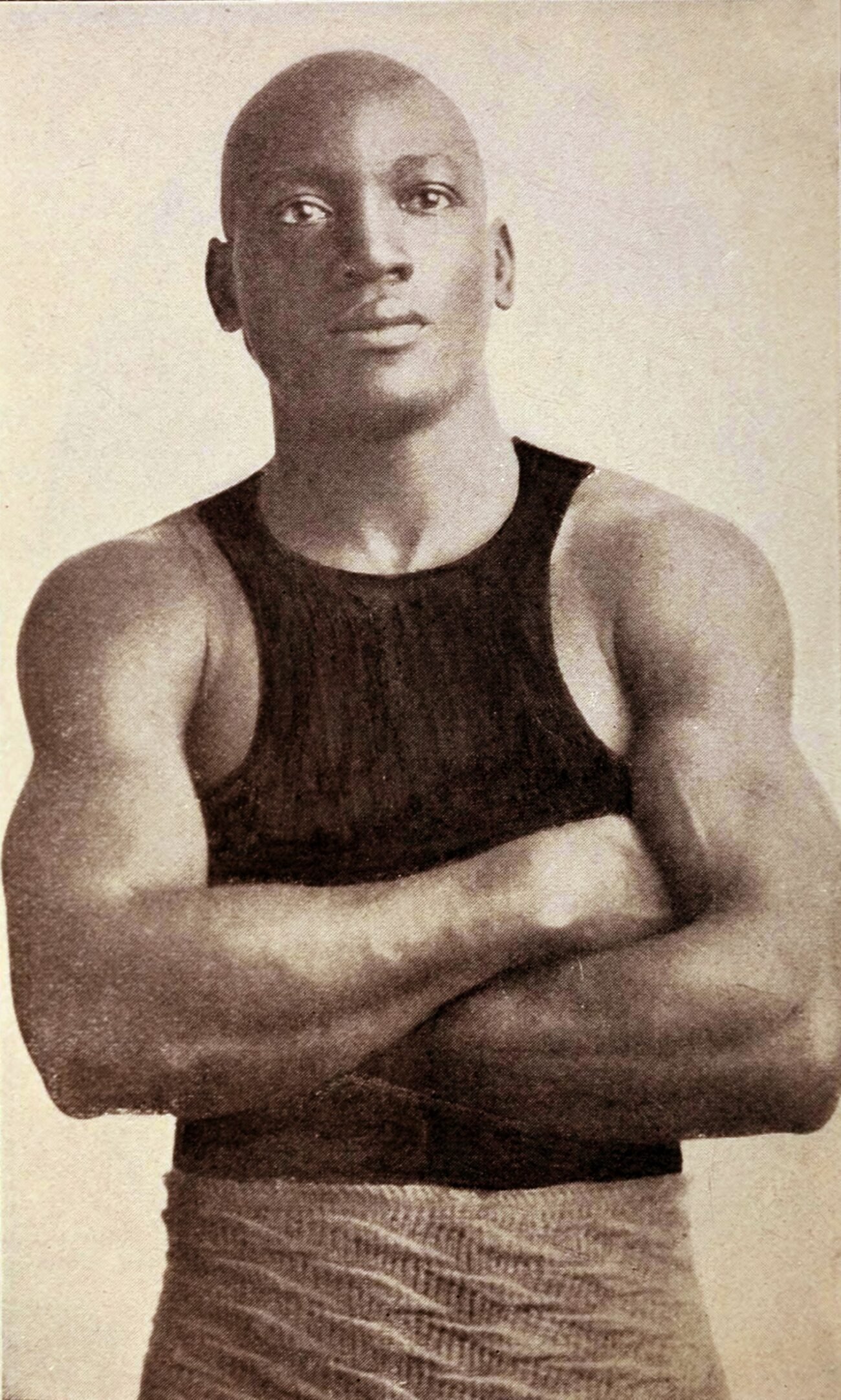

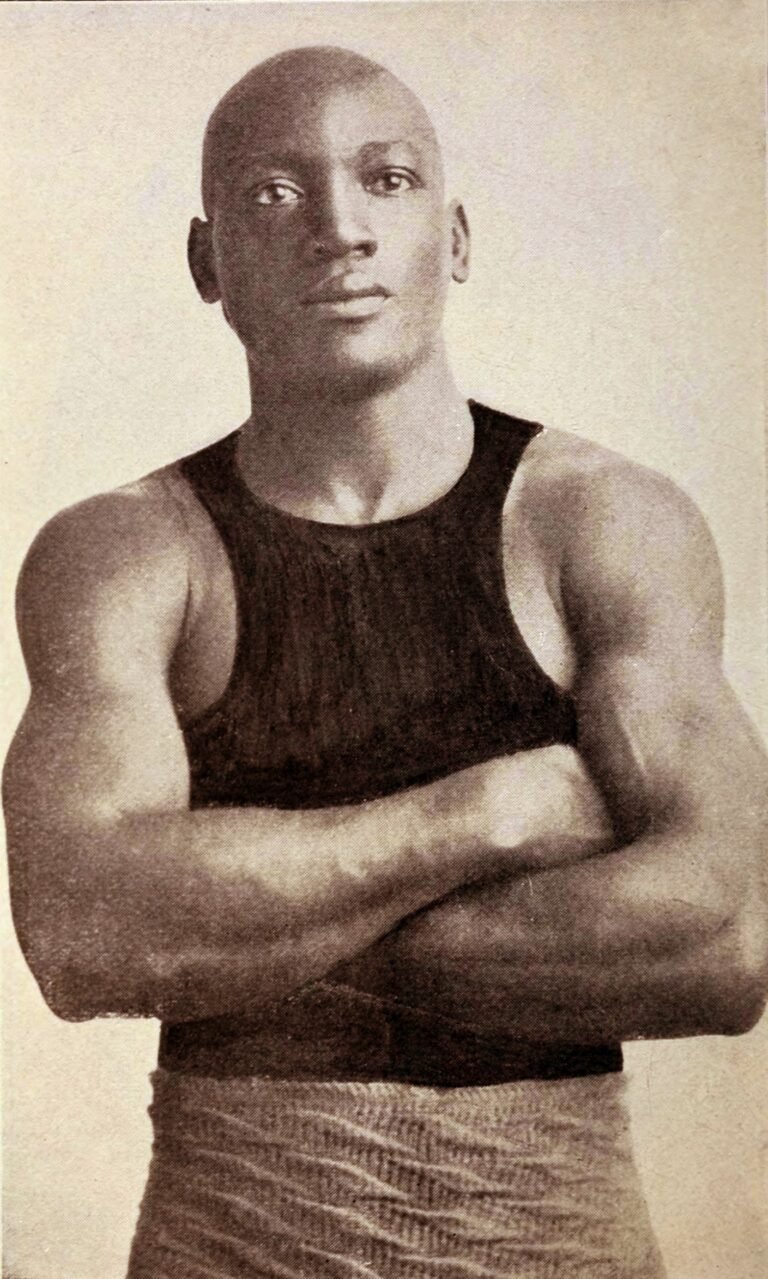
Jack Johnson in a studio portrait, c.1908. His win over Tommy Burns marked a shift in how heavyweights controlled fights at distance.
Image: Public domain (R.K. Fox, The Life and Battles of Jack Johnson, 1909)
Jack Johnson’s win over Tommy Burns in 1908 pushed things further. Johnson didn’t rush, didn’t trade, and didn’t fight at his opponent’s pace. He controlled distance, picked his shots, and stayed composed while others broke down. That approach carried into his win over Jeffries in 1910, where the returning former champion couldn’t force the kind of fight he needed. Johnson dictated everything.
By the 1920s, another change came. Jack Dempsey brought pressure and aggression, overwhelming opponents early, but Gene Tunney answered that in 1926 with discipline and movement. Even in their rematch, when Dempsey dropped him, Tunney stayed with his approach and recovered. Over 15 rounds, control beat chaos, and the title stayed with the fighter who could manage the fight on his terms.
Joe Louis refined that control into something sharper. When he stopped James Braddock in 1937, it wasn’t just power deciding it. It was timing, accuracy, and efficiency. Louis didn’t waste shots, and over time, opponents ran out of answers. His long title run showed how far the division had moved from the earlier brawling styles.
Muhammad Ali brought another change. Speed, movement, and reflexes at heavyweight were taken to a different level, but even that had its limits after time away. When he returned and fought Joe Frazier in 1971, Frazier’s pressure and consistency forced a fight Ali couldn’t fully control. Over 15 rounds, the title changed hands again, this time to the fighter who could keep applying it.
These moments don’t line up by accident. The heavyweight title tends to move when the division moves with it. A champion can look secure until someone shows up with a way of fighting he hasn’t solved, and once that happens, the result usually follows.
Read the full article here