






A few soft opponents will not cause supporters to abandon Itauma. The real difficulty is finding fighters who can extend him without beating him.
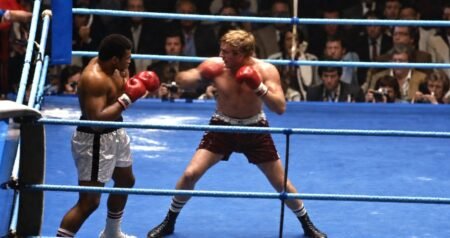
To support his warning, Fury used his own career as the example Itauma should have followed.
“I did it the traditional route, and it’s done like that for a reason,” Fury said. “I was 27 years old when I fought Wladimir Klitschko; I was a 10-1 underdog [but] I was ready. If I’d have fought him at 21, I’d have got knocked out, too.”
There is some truth in that. Fury spent years fighting domestic and European opposition before receiving his first world title opportunity. He entered the Klitschko fight with a 24-0 record, making the November 2015 contest his 25th professional bout.
What his version leaves out is Klitschko’s condition at the time. The champion was 39 and nearing the end of his career. His reactions, punch output, and willingness to exchange had declined. Fury did not complete a traditional apprenticeship and then defeat a heavyweight champion at his physical peak.
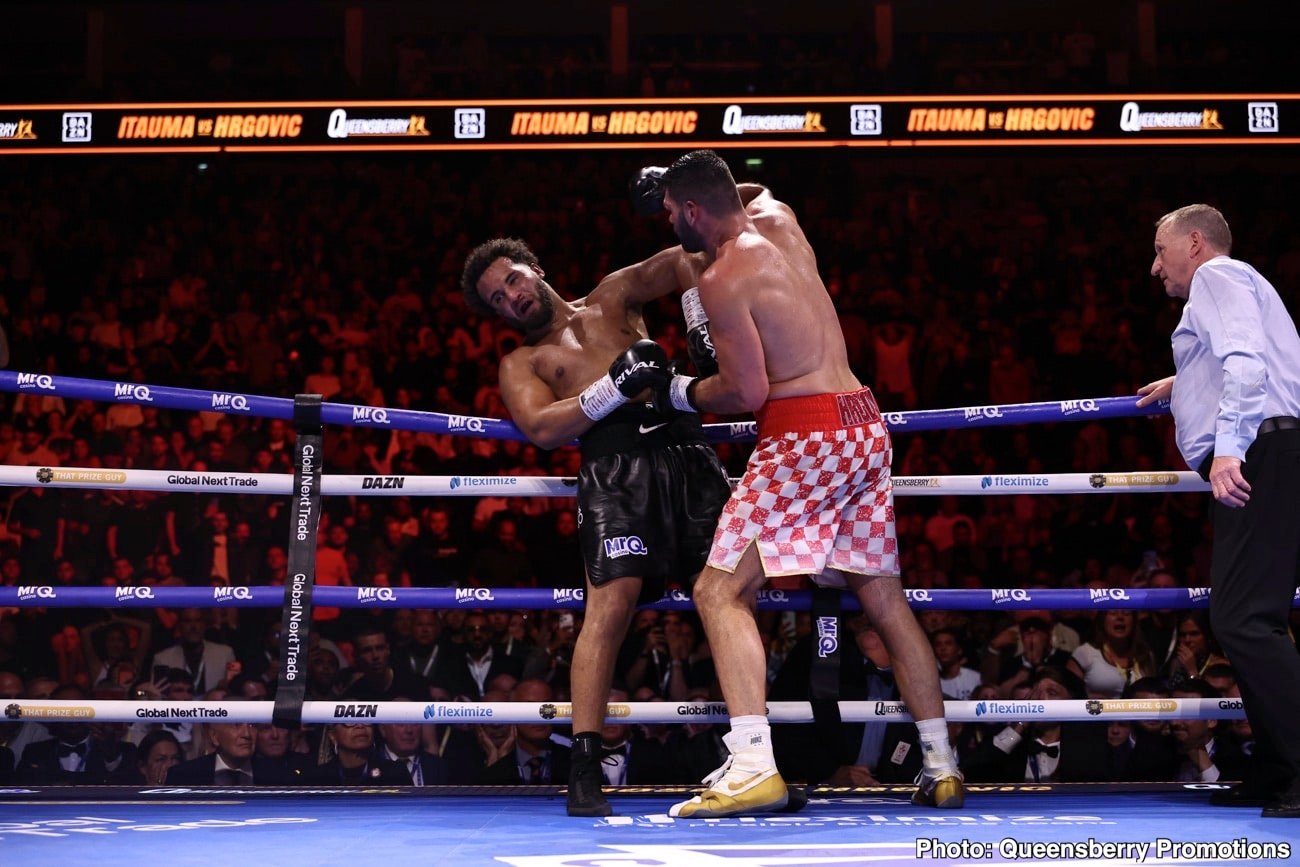
With only 35 professional rounds behind him, Itauma was given a much more dangerous test. Hrgovic was experienced, durable, and able to force a hard pace after absorbing Itauma’s best punches.
The promotional obsession with Itauma breaking Mike Tyson’s record as the youngest heavyweight champion also helped accelerate his development. That age window had already closed by the time he fought Hrgovic, but the rush had shaped his career. Opponents were selected to produce quick knockouts and keep him moving toward a marketing milestone.
Those victories established Itauma’s destructive image without preparing him for the moment a world-class heavyweight refused to disappear.
Stories about Itauma handling leading heavyweights in sparring helped create confidence in his readiness. Fabio Wardley also confirmed that Itauma had completed 12-round sparring sessions despite an earlier interview clip suggesting otherwise.
Completing 12 rounds in a gym is not the same as fighting nine hard rounds under championship pressure. Sparring partners can reduce the pace and stop when instructed. There are no judges, title stakes, or thousands of spectators reacting to every punch.
Once the fight began, Hrgovic presented a psychological test that closed gym sessions could not reproduce. Itauma hit him hard, dropped him in the second round, and continued attacking, yet the older man kept coming. Every unsuccessful attempt to finish Hrgovic increased the physical and mental cost.
Nothing in Itauma’s professional experience had prepared him for an opponent absorbing that much punishment and returning with greater pressure after six rounds.
It would be too simple to blame roadwork or poor cardiovascular conditioning. Itauma exhausted himself through the way he fought.
Nearly every combination was thrown with maximum torque. He remained tense at close range and repeatedly searched for a damaging finish. He lacked a controlling jab that would allow him to maintain distance, score without spending heavily, and recover while remaining offensively active.
After Hrgovic survived the early assault, Itauma had no economical gear. His legs weakened, his punches lost their shape, and he no longer had the energy to defend himself or slow Hrgovic’s advance.
The jump in opposition was considerable, but the matchmaking alone did not cause the defeat. Itauma’s approach made an already difficult test even harder.
Proof that a young heavyweight can recover from a defeat is already available within Queensberry. Frank Warren continued working with Daniel Dubois after losses to Joe Joyce and Oleksandr Usyk.
After both fights, Dubois faced criticism, particularly when he took a knee and allowed the referee to count him out. Those defeats did not destroy his commercial value or end his title ambitions. Queensberry lowered the pressure, found suitable fights, and gave him another opportunity to develop.
Rather than watching a “billion-dollar” future disappear, Itauma may be following a rougher version of the Dubois route. The difference is that Queensberry must use the rebuilding period to correct an identifiable weakness instead of merely restoring his knockout streak.
“I just think that knocking out a low-level man is different to knocking out a world-class man; different power, toughness, everything,” Fury said. “It is totally different.
“It’s about getting the balance right. Get him in with somebody who is durable, not that dangerous, who can take punishment and give him the rounds. He needs to get used to getting the rounds in.”
Here, Fury makes his strongest point. Queensberry needs durable opponents who can survive Itauma’s opening attacks, make him think, and force him to regulate his output. He must learn to vary the speed of his punches, take quiet periods, and stop treating every opening as a chance to produce a knockout.
Until he does, the Hrgovic blueprint will remain available. A mobile heavyweight can stay away during the early rounds, while a durable pressure fighter can absorb his power and wait for him to slow down.
Careful matchmaking can restore Itauma’s popularity, but it cannot disguise his stamina forever. If his engine remains suited to six rounds, the same ending will remain possible whenever an opponent lasts long enough to test it.


Read the full article here