




Tyson’s comeback run created a false picture of his condition. Peter McNeeley’s corner ended their bout after 89 seconds. Buster Mathis Jr. lasted three rounds. Frank Bruno collapsed under heavy pressure, while Bruce Seldon went down twice during a brief and unconvincing title defense.
Those quick finishes showed Tyson could still terrorize carefully selected opposition. They never tested his ability to solve a determined elite heavyweight once the early knockout failed to arrive.
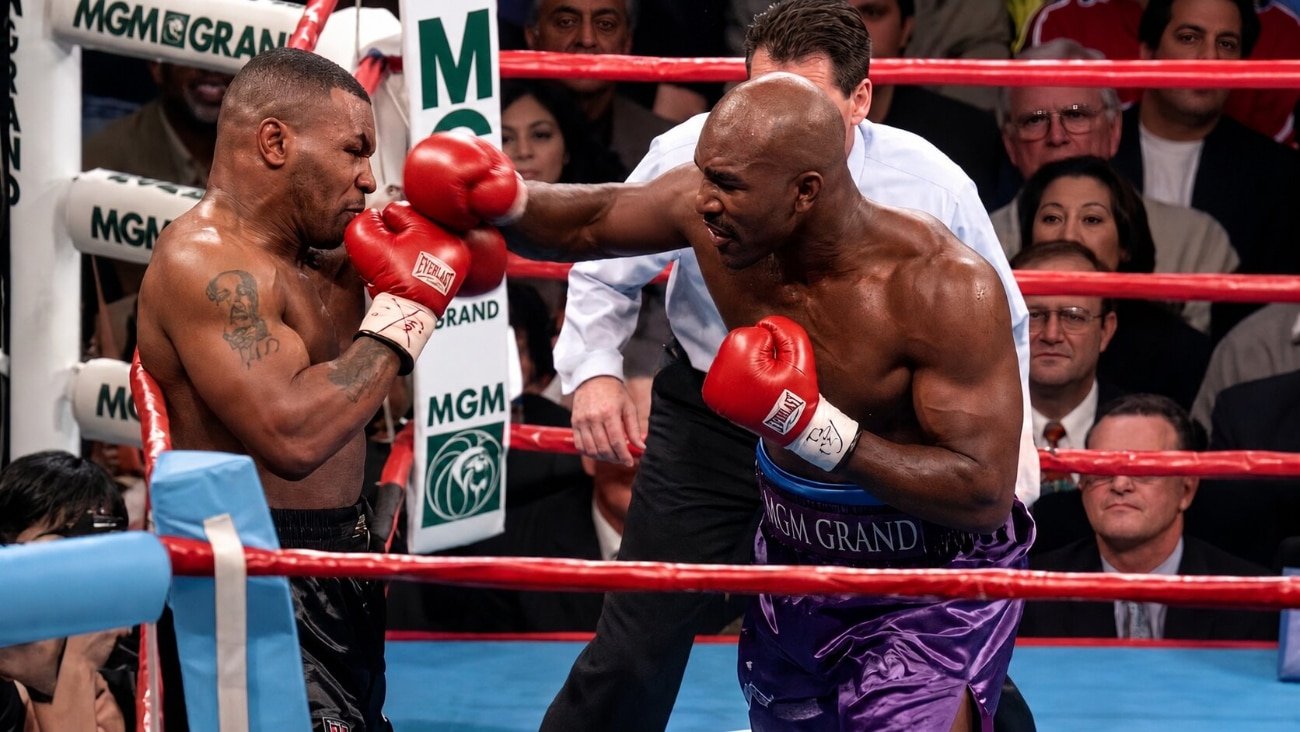
Tyson caught Holyfield with a hard right hand in the opening minute, but Holyfield absorbed it without showing distress. He pushed Tyson backward in the clinches, punished him with short inside punches, and established a physical pace the champion could not match.
Holyfield controlled the distance intelligently. He operated outside behind his jab, then stepped chest-to-chest whenever Tyson charged into punching range. That denied Tyson the space needed to generate full power on his hooks and uppercuts.
Tyson no longer slipped his way inside with the constant head movement and combinations seen during his best years. He frequently loaded up on one punch, leaving Holyfield time to block, clinch, or answer with straight right hands. Holyfield began timing those isolated attacks instead of reacting fearfully to them.
That resistance disrupted Tyson’s entire offense. He was accustomed to opponents retreating in straight lines and hiding behind high guards. Holyfield stepped forward, smothered his leverage, and punched whenever Tyson finished. The feared destroyer suddenly had to fight for every inch of canvas.
A clash of heads opened a cut over Tyson’s left eye in the sixth round. Tyson’s corner complained about Holyfield’s rough tactics, but the cut did not decide the fight. Holyfield dropped Tyson with a left hook later in the round, scoring the first knockdown against him since Buster Douglas stopped him in Tokyo.
The greater damage was mental. Tyson rose quickly, yet his resistance weakened as Holyfield continued driving him backward. By the tenth, Tyson was reeling into the ropes under a sustained attack and needed the bell to survive.
Holyfield resumed the punishment in the eleventh. A series of clean punches left Tyson defenseless, forcing referee Mitch Halpern to stop the contest 37 seconds into the round.
Holyfield exposed more than Tyson’s dependence on fear. He revealed the technical limitations underneath it. Tyson struggled to create punching room inside, stopped working in combinations, and lacked the patience to rebuild his offense after Holyfield took away his preferred range.
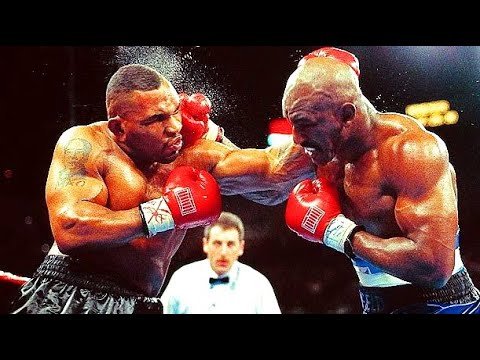
The rematch produced the infamous biting incident. Their original meeting delivered the more revealing image: Tyson being forced backward by an opponent who refused to cooperate with his reputation. Holyfield did not merely survive the bully. He dismantled the formula that made the bully successful.

Read the full article here