


The robots are here, and they are a hoot.
MLB’s new automated ball-strike (ABS) challenge system was the star of opening weekend, the main character in the first scene of this baseball season. Prior to Opening Day, we’d seen ABS in the minor leagues, in spring training, even in the All-Star Game, but this is a different beast.
Now the games actually matter. As a result, this weekend provided moments both predictable and unforeseen, including an ABS-related ejection, a standing ovation, rules confusion and a whole lot of head-tapping.
Here are a few takeaways from the first days of the ABS era.
Positive response from fans
Through the season’s first series, fans, particularly those inside stadiums, seemed to like the setup. That is, far and away, the most important outcome from opening weekend. MLB’s stated objective in implementing ABS was to “provide players with an opportunity to correct missed calls in high-leverage moments in a manner that fans like.”
Making the challenge process clear, swift and intuitive was always going to be the league’s biggest … well … challenge. But early returns are encouraging. The strike-zone graphic displayed on JumboTrons and shown on broadcasts is incredibly easy to understand. The online sentiment has been overwhelmingly positive. Eventually, some of the novelty of ABS will wear off, but this past weekend, folks at home and at the yard were hyped to see it used correctly in big spots.
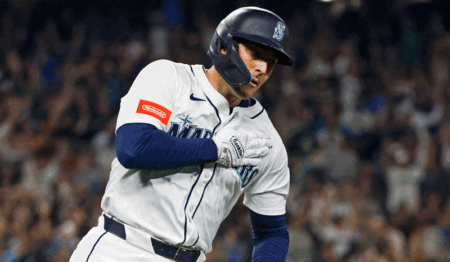
With two down and the bases loaded in the sixth inning of Saturday’s Red Sox-Reds game, home plate umpire C.B. Bucknor rang up Cincy’s Eugenio Suárez on a sinker off the plate and down on a 1-2 count. Suárez tapped his head as Boston hurler Ryan Watson strolled toward the dugout. Much to the roaring delight of 38,298, the call was quickly overturned.
That crowd pop was swell, but Great American Ballpark went completely ballistic a few moments later. Because on the very next pitch, a fastball an inch off the dish, Bucknor sat Suárez down once more. Again Suárez challenged. Again it was overturned. The resulting wave of sound was deafening.
Unfortunately for the fans in Cincinnati, on the next pitch, Suárez grounded out.
The first robo-ejection
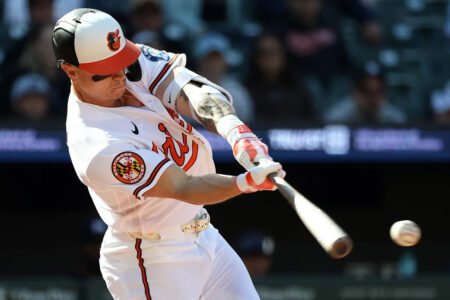
No game over the weekend featured more challenges than Sunday’s Orioles-Twins rubber match. The two clubs combined to concoct 10 ABS reviews, seven of which resulted in overturned calls. But the afternoon’s final challenge was the one everyone who was at Camden Yards will remember.
With the count full, a runner on first and the Twins down a pair in the ninth, O’s closer Ryan Helsley tossed in a slider to DH Josh Bell. The pitch was called a ball, and Bell started ambling toward first, but Helsley reacted by tapping his cap in the direction of home plate ump Chris Segal. After a review, the call was flipped, turning a walk to a strikeout and reshaping the tenor of what could’ve been a very tense ninth inning. Up the visiting dugout steps came Twins skipper Derek Shelton, passionately arguing that Helsley was given too much time to tap his cap for the challenge. Shelton was swiftly ejected.
The rulebook states that a player has two seconds to offer up a challenge, but it is the umpire’s discretion on whether to accept it. Earlier in the weekend, Braves first baseman Matt Olson was denied a challenge by umpire Doug Eddings, who said Olson took too much time. Shelton thought the same should’ve happened with Helsley. It didn’t, and that ended up helping Baltimore finish off a series win.
The whole situation was a reminder that ABS is still very much in its infancy. Umpires and players are learning the flow, the timing, the rhythm of this thing. The human element remains a very relevant factor. In time, some of the edges will get smoothed away, but there will always be enough gray area to incite the occasional ejection. There’s always going to be something to argue about.
ABS leaders so far
Mike Trout — who else? — leads all hitters in the early going with four challenges, three of which were successful. Red Sox youngster Roman Anthony has three. A whole host of players, including superstars such as Ronald Acuña Jr. and Kyle Schwarber, have two. It’s no surprise that the best players are feeling more compelled to ask for reviews. Teams are incentivized to give their top bats every possible advantage. Some clubs have been cagey about ABS strategy, but it’s safe to assume that the Trouts and Anthonys of the world are going to be more active in helmet-tapping.
Draft your Yahoo Fantasy Baseball team for the 2026 MLB Season
Speaking of strategy, only six pitchers have challenged so far. Unsurprisingly, just two were correct. During spring training, a number of clubs expressed skepticism about letting their pitchers challenge. That’s because minor-league data showed that pitchers were significantly worse at it, in part because they have the worst angle and in part because they tend to get more emotional. Expect more teams, like the Milwaukee Brewers, to start prohibiting their pitchers from challenging.
Behind the dish, no catcher was more active than Chicago White Sox backstop Edgar Quero, who challenged seven times across 16 innings in the squat. That’s probably not a coincidence. As a rookie last season, Quero was the single worst pitch-framer in MLB. But just because he’s poor at the physical act of receiving a pitch doesn’t mean Quero doesn’t know the zone. There were multiple times over the weekend when Quero suboptimally framed an in-zone pitch, influencing the ump to call a ball. Quero overturned four of his seven challenges.
Quero presents an interesting gateway into the interplay between ABS and pitch framing. Bad framers might prove to benefit from the challenge system more than good ones. Will that push teams to play worse defenders behind the dish? Does framing balls into strikes become less important now that hitters can challenge?
Time will tell, but Pandora’s strike zone is officially open.
Read the full article here