




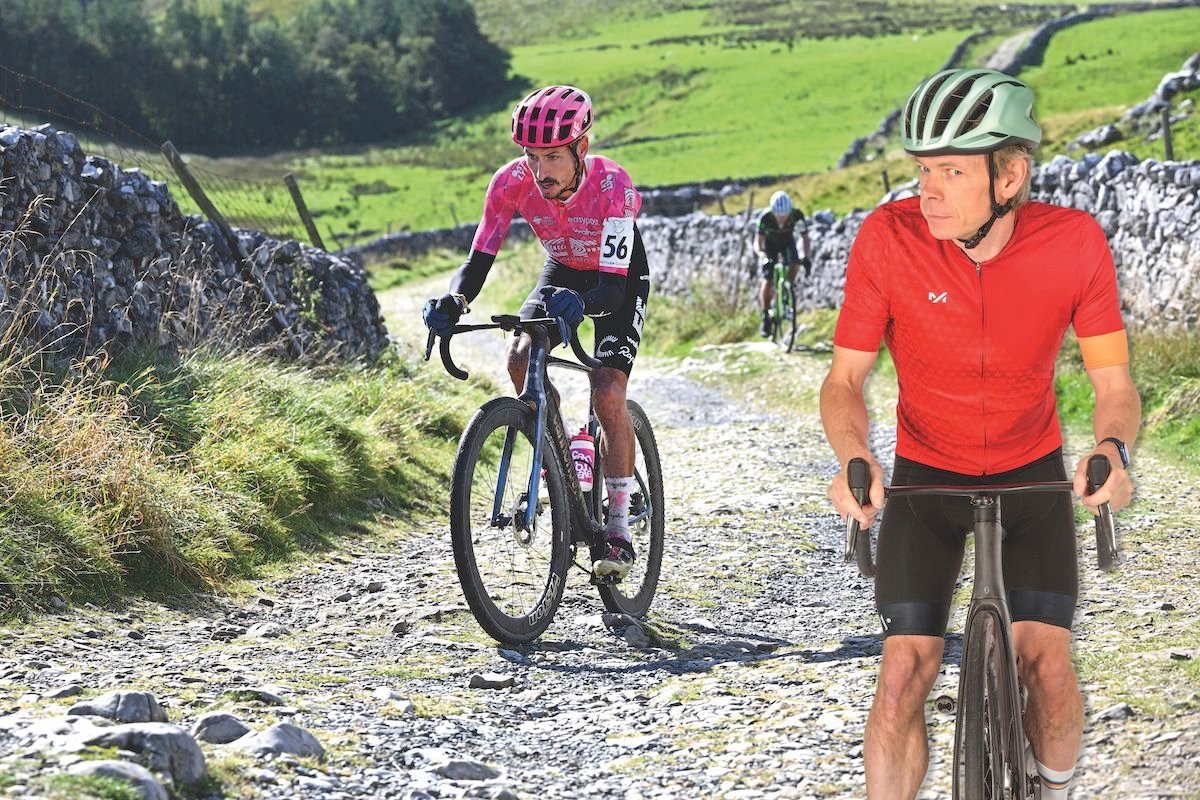
I do almost all of my riding on the road. Partly that’s my preference, partly it’s because I live in a part of the country where the off-road options are limited. If you’re still keen, you can thread rides together by adding up lots of short bridleways and field edges with bits of road and the odd longer path, but you’ve really got to want to do it.
I did go through a phase a few years ago where I tried to ride my MTB more, but I had a deadly combination of a desire to ride hard, an ability to kick out quite a lot of power, and minimal off-roading skills. I was like a Ford Focus with a jet engine. I’d hurl myself down tracks at 400 watts, and to say I fell off a lot would only begin to cover my interactions with the terrain. In fact, I fell off always.
Multiple TT national champion, best selling author, coach and commentator, Dr Hutch writes exclusively for Cycling Weekly each week.
I enjoy watching off road racing, though. I watched the European cyclocross champs last week, and lost count of the number of times I’d have fallen over. The skill levels are stunning.
Article continues below
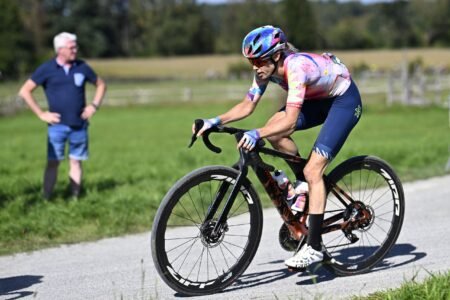
But here is my question. And I’ll be up front about the fact it is from the perspective of an outsider. What’s going on with all the off-road bike categories? Toon Aerts won the Euros. On a road frame. Granted, somewhat cross-ified (There is actually a word for this, which is “crucified”, but it’s a bit blasphemous) but a road frame all the same.
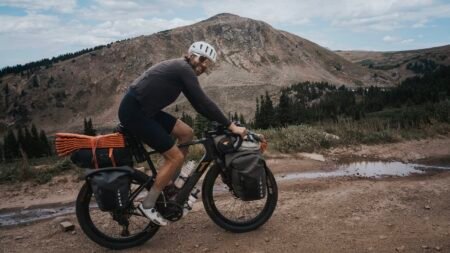
Meanwhile, the manufacturer Pearson is equipping its cyclocross riders with gravel bikes this season. And at the Three Peaks cyclocross race, Lachlan Morton rode a gravel bike. Gravel bikes are banned for the Three Peaks, so he turned it into a cross bike by fitting narrower tyres.
Then there are flat-bar gravel bikes that are, I’m often told, nothing at all like an old rigid mountain bike. Despite looking identical.
I’m not finished. I recently read a group test of all-road bikes, which were described as occupying the gap between endurance road bikes and the racier end of gravel bikes. As I’ve already admitted, this isn’t exactly my area of expertise, but that sounds like a very, very small target to fire a bike at. I reckon I could make my S-Works SL8 road bike into a workable all-road bike by letting 25 psi out of each tyre and being sanguine about the odd puncture.
It does remind me of other things that I do understand better. In the 2000s, manufacturers would maintain that there was such a thing as a “crit” bike – a special road bike that was better on short circuits because… well, who the hell knew. Geometry, yada yada, responsiveness, yada yada.
Think this sort of thing is an artefact of the past? Without looking it up, can you tell me whether we are, right now in the late autumn of 2025, in a period where “aero bikes” and “climbing bikes” are two separate things? Or are we in one of those halcyon months where they’ve been unified into bikes that are both light and aero? This is a question I should know the answer to, but I don’t think anyone can keep track.
A cynical person might think that part of what’s going on here is an industry that’s still getting over the pandemic and wants to sell multiple bikes to each customer, and reckons that the more categories it can find between track bike and full-suspension MTB the better.
If that’s the case, I’m happy to do my bit for the industry. I’ll just mention my friend Bernard, who recently texted me an image of a cracked wheel. “I don’t need a gravel bike,” he said. “I need a pothole bike.”
It’s just a suggestion.
Acts of Cycling Stupidity
A recent conversation with a friend about the first times we’d tried various upgrades in races unearthed a tale from the 2000s, about the first time he’d used, or attempted to use, his new “head-fairing” – the old plastic TT lids we used in the days before protective helmets became compulsory.
“First time I used it, it made me at least two minutes slower. My dad gave me a lift to the race, and when I got the fairing out, he thought it was hilarious. He put it on back to front and hopped around the carpark pretending to be a chicken and pecking at things with his new beak. By the time I got it back off him, I was two minutes late starting.”
How To… Get Dressed
Getting dressed for a winter ride is a complicated alchemy of the weather, the length of ride, who you’re riding with, and what bits of kit are clean enough to wear in public. Bear in mind that the transitory nature of all these things means that all these factors can only be resolved into a single solution for a very short space of time – generally around 30 seconds long, at a point 15 minutes into the ride.
Check the temperature. Remember that it’s going to take you about 30 minutes to get dressed and get out the door and allow for this. You should always aim to wear as much as you can get off with. You look like an idiot if you get hypothermia, but if you wear everything you own to face a British winter you look like an Italian pro. If you’re too hot, do what an Italian pro would do and slow the hell down.
Check the rainfall radar. This may produce a compromise of ride length and route, which may in turn cause you to reassess how much warm kit you’ll need. After you’ve shortened the ride and swapped your tights for cooler leg warmers, check the radar again and swap back.
If it’s going to rain, remember that a cheap rain jacket leaks all over, and builds up a sweaty microclimate that you will, in time, get used to. A really good rain jacket will let moisture out and be perfectly waterproof, except for one single leak that will annoy you fifteen times as much as all the things wrong with a cheap jacket
Read the full article here