



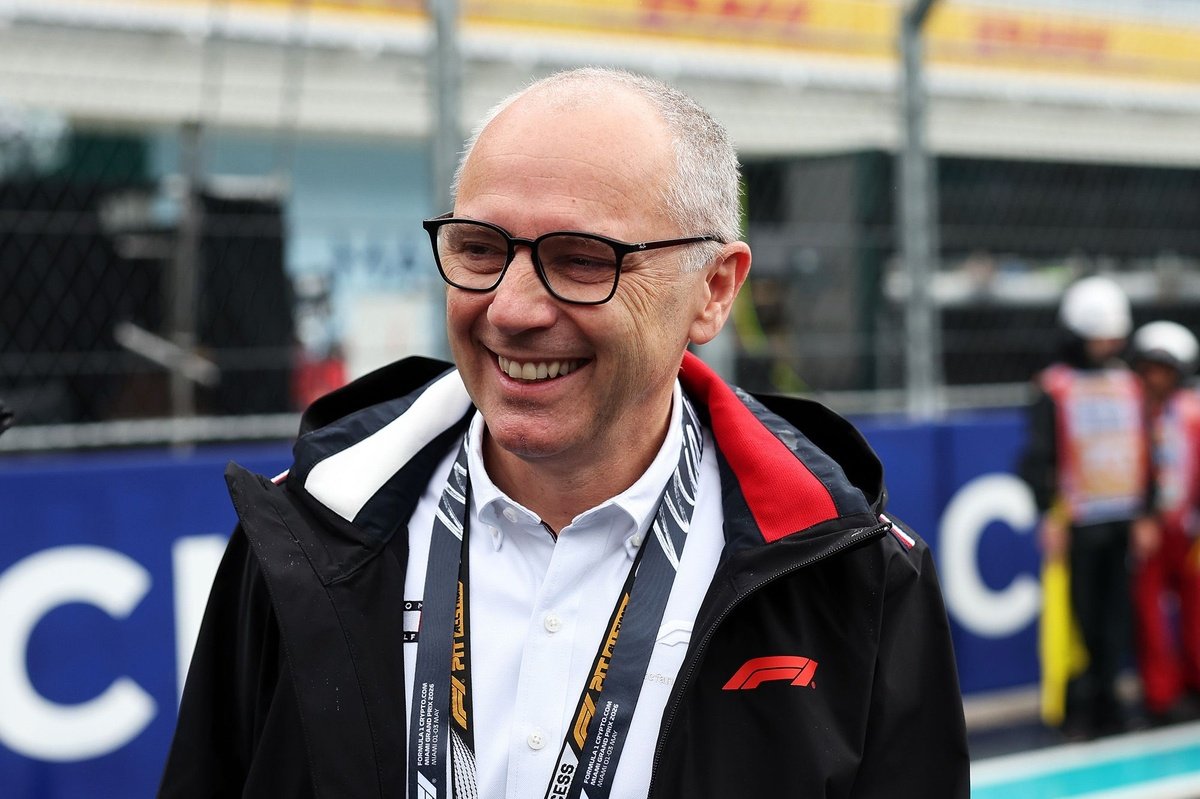
Formula 1 does not want to stop and contemplate the numbers of a particularly positive historical phase. This is the message Stefano Domenicali wanted to reiterate at Monza, ranging from the technical future of the championship to the evolution of the calendar, via the relationship with manufacturers, sprint races and the need to reach an increasingly young audience.
“The risk is becoming self-referential,” F1’s CEO explained. “We must not be satisfied with the success we have today. We must continue to understand why we have become so big and keep our feet on the ground, knowing that there are still many dimensions in which we can grow.”
One of the central themes concerns the regulatory future. F1 and the FIA will soon begin to consider the characteristics of the next generation of power units and single-seaters, in an industrial context that has changed profoundly compared to when the current rules were defined.
“When the regulatory change we are experiencing today was addressed, it seemed that the future was defined by electrification. Today that is no longer the case,” Domenicali stressed. “It is up to us to understand how to react and interpret this change in the right way.”
The point is to find a balance between the needs of the major manufacturers and the need for F1 not to depend completely on their industrial strategies. “On the one hand we must guarantee the presence of the manufacturers, but on the other, if they were to have different priorities, we must understand how to manage to be independent. If the manufacturers decided to leave today, we would have a big problem.”
Hence the possibility of moving in the future towards less complex technical solutions. “A less complex project, obviously while respecting cost and performance targets, helps to be independent.” Domenicali also indicated two points he considers fundamental: “I strongly believe in keeping sustainable fuels at the heart of the technological project and in moving towards a lighter car, because we want to see drivers who can really push to the limit a machine that must be in their hands.”
Domenicali is opening to shortening F1 races
Photo by: Eric Le Galliot
Shorter grands prix
Also on the table is a broader reflection on the sporting product. Among the ideas that have emerged in recent months is that of slightly reducing the distance of grands prix, a possibility on which Domenicali has not closed the door. “My position is very simple and starts from a technical consideration. If we are talking, as it seems, about a few laps, for me it also goes in the direction of the fact that young people tend to be less and less present for long things. I don’t think there would be a negative effect if we are talking about reducing by two or three laps. If it became something more significant it would be a different discussion, but in this perspective I am not opposed.”
It is the same philosophy that accompanied the introduction of sprint races, initially met with some perplexity even by Domenicali himself. “I am the first who, as a Formula 1 dinosaur, had doubts when we proposed this. But the data did not contradict it: promoters, media and fans, in the vast majority, have digested the format and consider it dynamic.”
Sprint races will therefore continue to be part of F1, although Domenicali ruled out a scenario similar to MotoGP, with one every weekend. “They will be [at] fewer than half” of the events, he specified. “Young people increasingly appreciate a weekend in which there is already something that counts on Friday. Long-standing fans, and I include myself among them, may also be interested in a practice session, but for the general public having qualifying already on Friday means having more content.”
An evolution that Domenicali links directly to the change in the audience. “Today we have around 40% of the people who follow us coming are female and an average age that has gone from around 57 years to 34.” A transformation to which, in Italy as an example, the Kimi Antonelli effect is also contributing.
“I have to tell the truth, the numbers are surprising me because they are growing strongly,” Domenicali said. “Kimi has brought not only competitiveness on track, but also a wave of people who did not follow Formula 1 before. He is a young man who faces an enormous responsibility with a lightness typical of young people. He has a naturalness and freshness in which kids his age can recognise themselves.”
Turning peak interest into lasting success
Domenicali, however, insisted on the need to turn these peaks of attention into a lasting relationship. “We must avoid it being a growth spike that then leaves us. The great challenge is to understand how to keep connected those who show up for the first time. There are communities that do not know us and we have an obligation to build a Formula 1 culture.”
This scenario also includes the geographical expansion of the championship. Domenicali cited China, South America, Far East and Africa as areas with significant room for growth. “Africa is giving important signals on which we want soon to communicate something significant.”

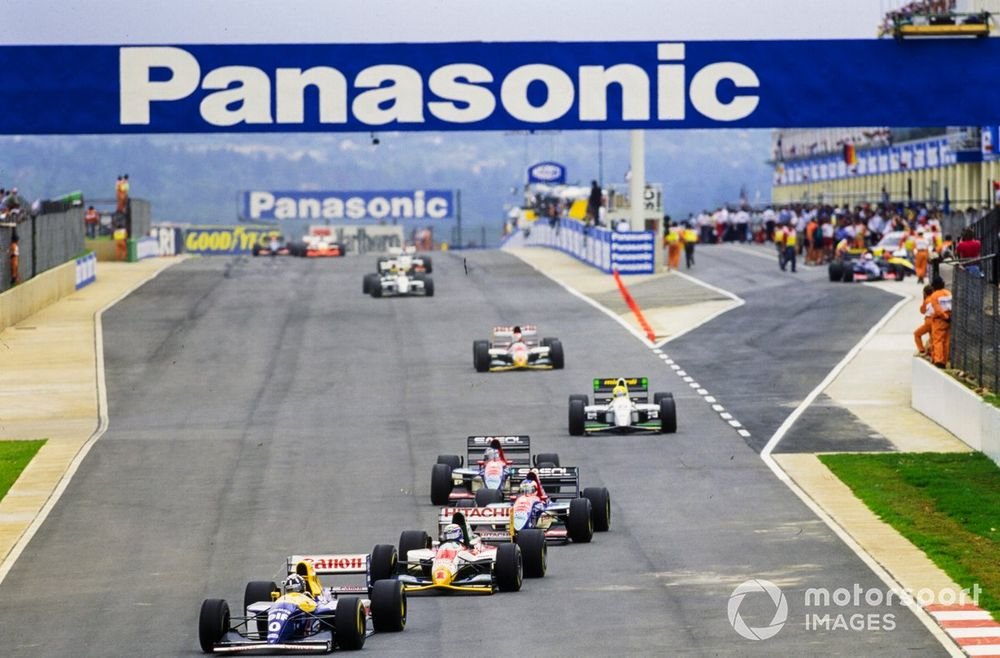
Hill leads Zanardi during the 1993 South African GP
Photo by: Motorsport Images
Finally, there remains the issue of the more immediate calendar, with Qatar and Abu Dhabi still confirmed but under observation. “The calendar, at the moment, is the one you know. We are monitoring the situation because, if safety and operability are not guaranteed in full, we will have to take other decisions. The teams are absolutely up to date, the dialogue with them is continuous.”
Even in a phase of expansion, therefore, Domenicali identifies the ability to react quickly as the main solution to future risks: “Things change so quickly that, if you are not able to react, you lose a lot of time in an instant. The risk we must not run is that of stopping looking for competent people, fresh ideas and new points of view. When you keep fishing in the same pond, the fish is always the same.”
We want to hear from you!
Let us know what you would like to see from us in the future.
Take our survey
– The Autosport.com Team
Read the full article here