




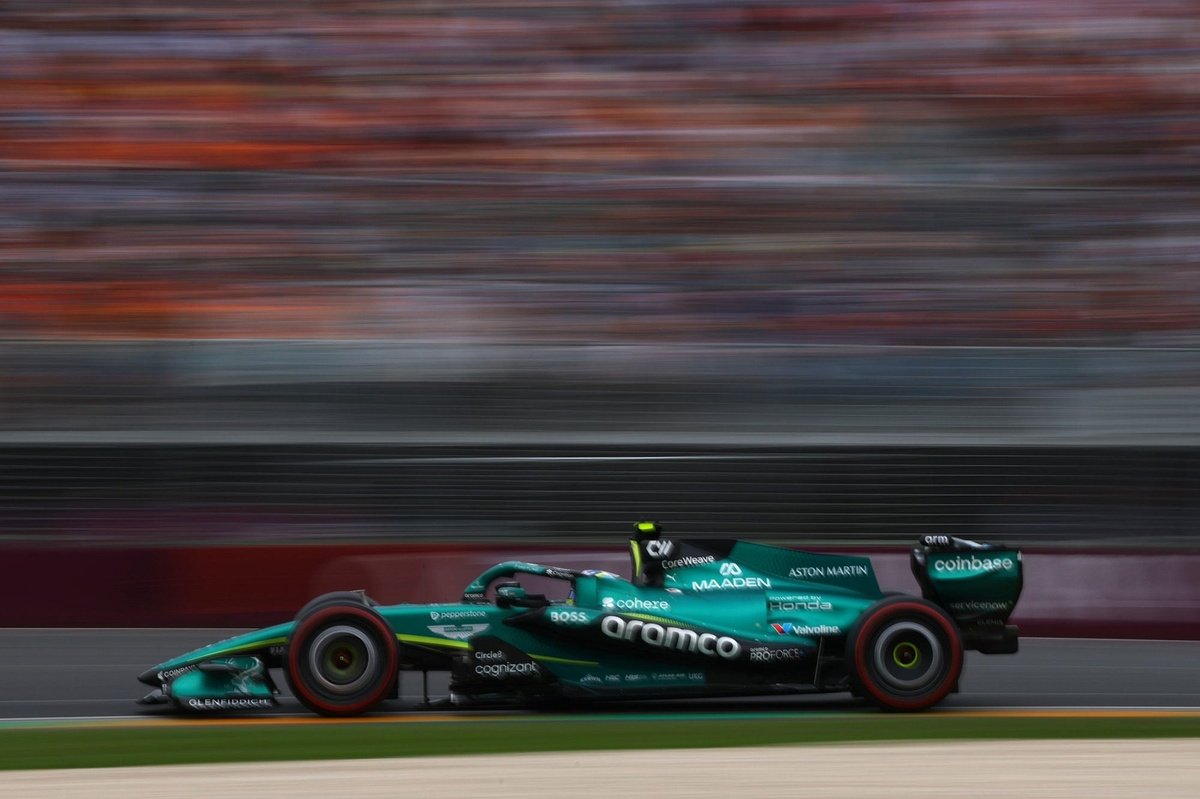
When Adrian Newey appeared at the FIA press conference in Melbourne on Friday, it was already clear that Aston Martin would face an extremely difficult start to the Formula 1 season and that the problems at Honda were numerous. The team principal shared more details than during winter testing – most notably by revealing that the Japanese manufacturer had only two batteries left for the first race weekend of 2026 – although the most revealing remark concerned something else.
It was not directly about the power unit itself or the Australian Grand Prix, but about the overall state of Honda’s F1 project. By now, it is widely known that the project looks completely different compared to the successful years with Red Bull, something Newey confirmed publicly on Friday.
“A bit of history is important there. Honda pulled out at the end of 2021. They then re-entered the sport, kind of, at the end of 2022, so over roughly a year out of competition. When they reformed, a lot of the original group had, it now transpires, disbanded and gone to work on solar panels or whatever,” Newey confirmed. “And so, a lot of the group that reformed are actually fresh to Formula 1. They didn’t bring the experience that they had had previously.
“Plus, when they came back in 2023, that was the first year of the budget cap introduction for engines, so all their rivals had been developing away through ’21, ’22 with continuity, their existing team, and free of budget cap. They re-entered with, let’s say, only, I’m guessing, 30% of their original team, and now in a budget cap era. So, they started very much on the back foot and unfortunately, they’ve struggled to catch back up.”
Visit to Tokyo revealed the new reality
The most notable aspect, however, is that Newey admitted Aston Martin had not been aware of this situation for a remarkably long time. The factory deal with Honda was announced in May 2023, but according to Newey the Lawrence Stroll-led organisation did not know when signing the agreement that the Honda project was far less experienced than before.
“No, we weren’t [aware of that]. We only really became aware of it in November of last year when Lawrence, Andy Cowell and myself went to Tokyo to discuss rumours starting to suggest that their original target power they wouldn’t achieve for race one. And out of that came the fact that many of the original workforce had not returned when they restarted, so no is the answer,” Newey said.
Adrian Newey, Aston Martin Racing
Photo by: Rudy Carezzevoli / Getty Images
That answer is particularly interesting, especially if it does not serve a political purpose and reflects the actual situation. Other teams in the paddock believe the current communication may partly be aimed at the FIA, to secure additional development possibilities and a special increase of the budget cap for power unit manufacturers.
But if that is not the background, then the situation Newey revealed is sobering. It would mean Aston Martin did not fully know what it was signing up for when agreeing to the deal – raising questions about the homework that had been done.
The status of a works team naturally sounded very attractive – and for the long term it still is – but Aston Martin’s new works partner was in a much weaker position than during the successful seasons with Red Bull.
On paper, the integration of the power unit into the chassis is one of the biggest advantages of the works deal, something Mercedes is now demonstrating in practice with its superior efficiency and power unit understanding. But that also hides an important danger: asking for things that are potentially complex, to which Honda does not say ‘no’, but which in reality are too ambitious for a rather inexperienced group.
Japanese media have reported these kinds of stories ahead of the Australian Grand Prix, suggesting Newey asked for changes relatively late – something that was denied in Melbourne by HRC president Koji Watanabe. But finding the right balance between these aspects remains a difficult task. Optimal integration of the power unit into the chassis theoretically provides a major advantage for a works team and therefore must be exploited, but given Honda’s current problems the Japanese manufacturer first needs to get the basics right – and that already appears difficult enough.
Why the Honda and Red Bull projects are difficult to compare
Somewhat simplistically, it has been stated in the paddock that despite recent F1 experience Honda is struggling considerably more than newcomers such as Audi and Red Bull Ford Powertrains, and that both Red Bull teams ‘dodged a bullet’ by taking fate into their own hands from this year onwards.

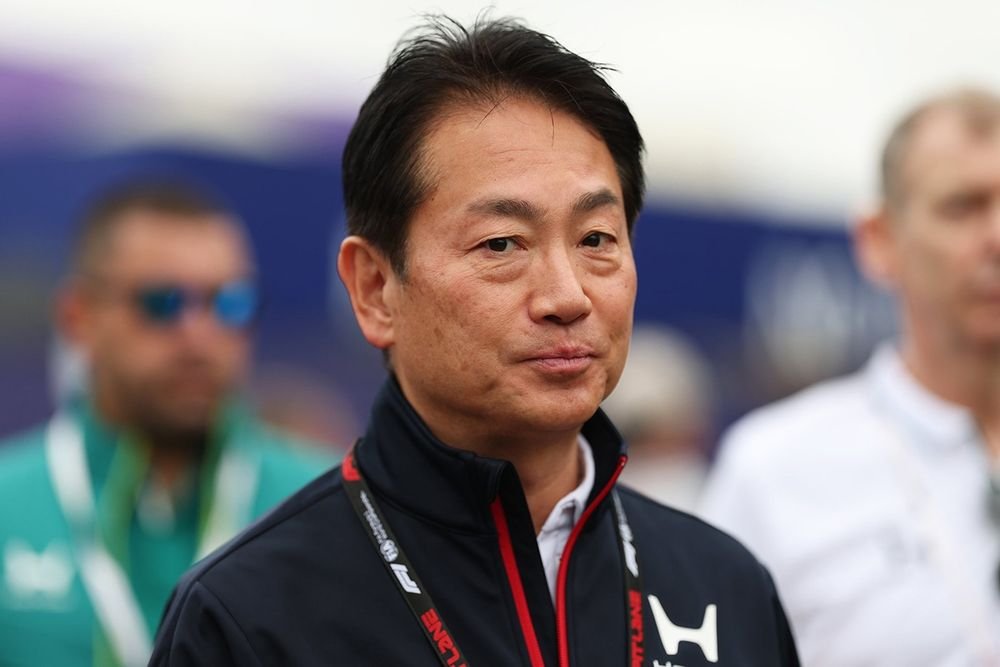
Koji Watanabe, President, CEO and Representative Director of Honda Racing Corporation
Photo by: Sam Bloxham / LAT Images via Getty Images
However, two crucial caveats must be made. First of all, the two projects are extremely difficult to compare. Red Bull built the power unit project on its own campus in Milton Keynes, whereas Honda operates mainly from Sakura. That alone creates a completely different logistical reality for both parties, meaning at Red Bull the integration of engine and chassis literally takes place on the same site.
Moreover, Red Bull has recruited a significant amount of external expertise. Besides many hires from Mercedes High Performance Powertrains and AVL, staff from former engine partner Honda have also been brought in. Honda, by contrast, has built the current project largely from within, meaning – as Newey explained – many team members have little meaningful F1 experience yet.
The knowledge Red Bull has acquired from Mercedes HPP has not only helped with the engine development itself, but also with setting up the facilities in Milton Keynes. During a tour of the engine factory, Steve Brody – who joined from HPP – explained that lessons from Brixworth were taken into account when designing the all-new facilities. The strong elements of the Mercedes factory were replicated, while they were almost given a carte blanche to organise things differently where they believed Mercedes’ set-up was not yet optimal.
At Honda, the facilities in Sakura are very good and modern – something Cowell was very impressed by during his visit – but as Newey explained, some F1 experience is lacking. And that takes time to build.
An unfortunate decision to formally leave F1
The conclusion that Red Bull has escaped a painful season is therefore somewhat too simplistic. Red Bull’s decision to take matters into its own hands was largely born out of necessity, following Honda’s choice to formally leave F1 at the end of 2021, something Max Verstappen himself has acknowledged.
If Honda had not prematurely pulled the plug in 2021, Red Bull would not have needed to take its destiny into its own hands and HRC’s F1 project would have looked very different today. In that case the project would not have been dismantled and the accumulated F1 experience and know-how would not have been lost.
The current situation is largely the result of unfortunate timing in deciding to leave F1 during COVID times – something that, historically, has not been the first time for the Japanese manufacturer. The recovery will take time. As in the past, Honda will eventually make it work, but the questions remain how long that will take and, related to that, whether it will still come in time for Fernando Alonso.
We want to hear from you!
Let us know what you would like to see from us in the future.
Take our survey
– The Autosport.com Team
Read the full article here