




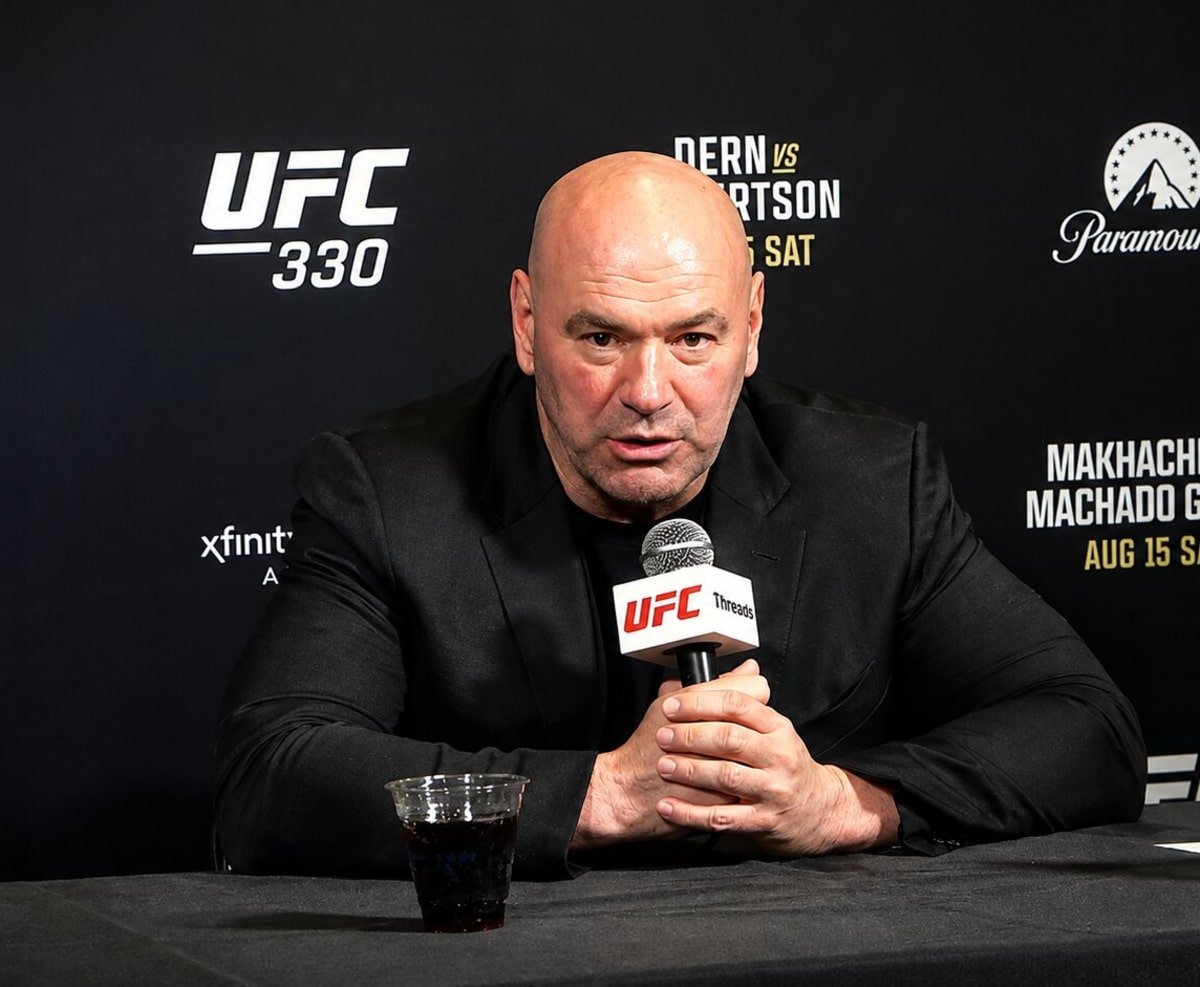


“Listen, this saga, we’ll see how this whole thing plays out,” White said. “I mean, they either want to fight or they don’t. I don’t know.”
That isn’t the language of someone convinced everything is settled.
The UFC CEO previously discussed helping put the fight together, but he clarified Saturday that his involvement didn’t include Joshua’s individual contract.
When questioned about Joshua’s agreement for the UK, White replied, “Well, I didn’t do his contract.”
So what did his side negotiate?
“We did the television deal and the venue deal,” White said.
His answer helps explain why White and Eddie Hearn are describing different arrangements. Hearn maintains that Joshua agreed to fight Fury in Britain. White says his side handled the television and venue deals.
The difficulty is getting those pieces to fit.
For British boxing followers, Joshua-Fury remains an enormous domestic event. The American market is different. The fight that once would have determined heavyweight supremacy never happened, and both men are now nearing the end of their careers.
Joshua and Fury had considerably more leverage when they were champions, and their fight could have determined the best heavyweight in the world. They waited until that moment passed. Neither man has a title now, and the people financing the event are being asked to spend heavily on a rivalry that has lost much of its sporting importance.
What remains is the attraction of two famous former champions finally settling a rivalry years later.
That makes New York and U.S. prime time particularly valuable to Netflix. A British stadium can produce an enormous live gate and satisfy the audience most invested in Joshua-Fury, but it also places the fight earlier in the day for American viewers.
Hardcore boxing followers will find it regardless. Casual viewers who regard Joshua and Fury as aging former champions are a much tougher audience to attract.
If Netflix and the other parties are committing enormous money to the event, there is an obvious reason they would want to package Joshua-Fury as a major Saturday-night attraction from New York rather than an afternoon broadcast from Britain.
New York also carries some unpleasant history for Joshua. His American debut at Madison Square Garden in 2019 ended with Andy Ruiz Jr. dropping him four times and stopping him in the seventh round. That doesn’t establish that Joshua’s preference for Britain has anything to do with the Ruiz loss, but Madison Square Garden certainly hasn’t been a happy hunting ground for him.
White wouldn’t commit to New York when pressed about the location.
“We’ll see,” he said. “Listen, to make a fight, two guys have to want to fight. Period. End of story.”
White also said he personally wouldn’t object to Britain and left the location to the fighters. His willingness to accept the UK doesn’t necessarily solve the commercial issue for Netflix and the other parties putting significant money behind the event.
Hearn’s position makes the situation more difficult. His previous comments indicated that Joshua agreed to Britain and that moving the fight to the United States would require another agreement.
That gives Joshua an interesting form of leverage. His standing within the heavyweight division isn’t what it once was, but his contractual leverage may be considerably stronger.
Hearn can talk about delivering the fight to the British public, but Joshua’s UK agreement also gives his side a valuable negotiating position. If Netflix, Zuffa and the other financial backers want New York badly enough, Joshua doesn’t have to surrender that provision for free.
The question then becomes how much changing the location is worth.
If Joshua’s side refuses to give up Britain without receiving more money, the people financing Joshua-Fury have a decision to make. They can accept a UK event with less favorable U.S. broadcast hours, spend more to get Joshua into New York, or decide the economics no longer make sense.
White’s hesitation suggests that question hasn’t been resolved.
There is an irony to the dispute. Joshua-Fury was once one of the biggest fights boxing could produce. Years of losses, inactivity and missed opportunities have reduced its sporting importance. Britain can still sell it through the domestic rivalry and enormous name recognition of both fighters. Selling the same fight to a less invested American audience is more difficult.
“The fight should happen 10 years ago,” White said. “Is it going to happen now? We’ll see.”
White has gone from helping arrange the television and venue deals to publicly questioning whether Joshua and Fury actually want to fight. That makes the UK-New York disagreement look considerably more serious than an argument over geography.
Joshua and Fury may have lost much of the sporting leverage they possessed years ago, but Joshua still has contractual leverage if Britain is part of the agreement he signed. Netflix and the other financial backers must decide how much they are willing to spend to overcome it.
The argument over where Joshua-Fury happens may ultimately determine whether it happens at all.

Read the full article here