




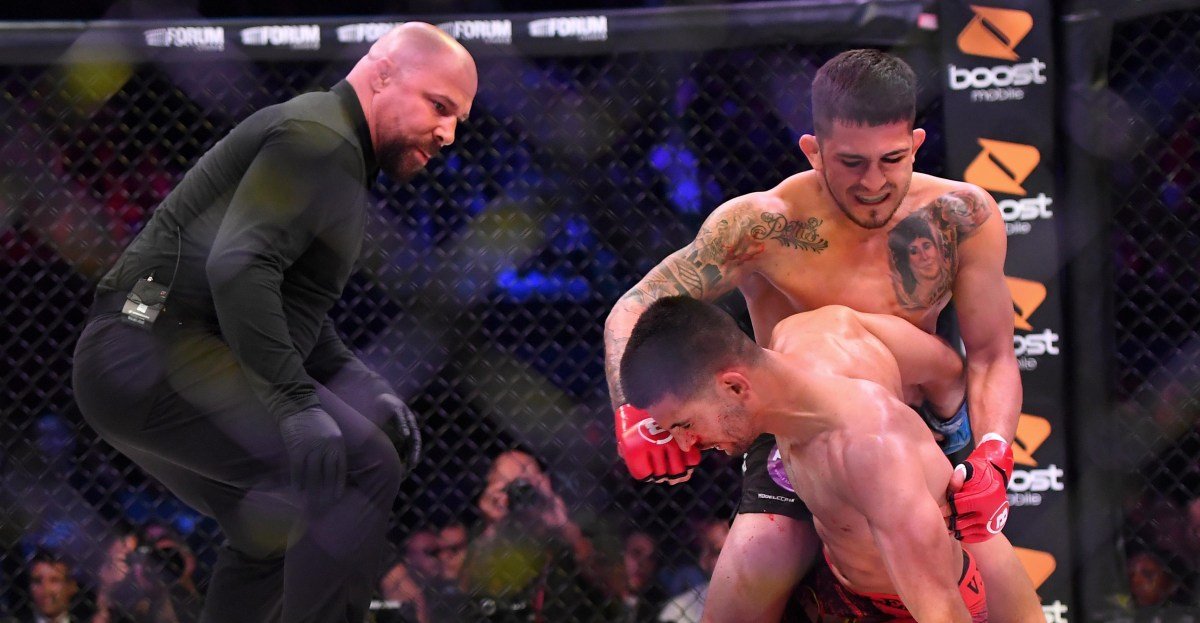
A bill is currently working its way through the California legislature that would allow the California State Athletic Commission to sell sponsorships, which would include logos placed on referees, judges and other officials working an event, with the money earned going back to a retirement fund set up for fighters after their careers are over.
Back in 2023, Governor Gavin Newsom signed into law the creation of a retirement benefit for MMA fighters after the state already had a similar law in place for boxers. The fund effectively matures and pays out money to fighters at 50 years of age who have accumulated a certain amount of rounds spent competing in California.
Now California State Athletic Commission executive director Andy Foster is championing an initiative that would use sponsorship dollars to feed even more money into that retirement fund.
“There are a lot of fighters who don’t make very much money,” Foster told MMA Fighting. “I think that’s fair to say that. We passed a minimum purse two or three years ago here in California because people weren’t making the minimum purse. There are going to be quite a few fighters who are going to receive more money if this passes at age 50 than they did their entire career combined.
“It’s because the top guys pull up the bottom guys, as they should, but if this passes and does the numbers that I think it’s going to do, a fighter could potentially at age 50, somewhere between $150,000 to $300,000. Those are different numbers and that’s enough money to where a fighter could take that and put a down payment on a house or they could go back to college. There’s things you can do with that much money.”
UFC veteran Chris Leben, who spent eight years with the promotion, now works as a referee and judge in California and he knows personally the tough time fighters face after retirement.
While he’s been able to provide for his family, Leben knows he’s the exception more than the rule when it comes to fighters who just don’t have a lot of options available them when fighting is done. He believes the pension fund in California could be a game changer for some fighters, especially those who never make it as far as the UFC or another major organization.
“I work seven days a week,” Leben said. “I’m in my gym right now in between classes and when I’m not here, I’m refereeing or judging a show. That’s so I can pay rent. That’s the truth. That’s what a lifetime of fighting in the UFC got me. I’m better off than most, to be 100% honest with you. A lot of the guys that I came up with aren’t in the best shape, not in the best spot. There’s nobody there to take care of them.
“My body has certainly paid for it. I’m blessed that I’m a referee and a judge and I have a gym where I coach. Because if I had to go work construction, which is what a lot of guys do, I’d be in a lot of pain all day long. That’s for sure.”
While any fighter who meets the requirements (39 rounds spent competing in California) would be eligible for the pension plan, one-time UFC welterweight title challenger Frank Trigg says the money really benefits local fighters more than anybody else.
Superstars such as Conor McGregor may compete in California a few times during the course of his career but he’s much more likely to travel to various states and other countries where he can sell the most tickets and bring in more viewers for his fights.
But there are hundreds of seemingly nameless fighters who never really leave California because they don’t make it to a promotion like the UFC. Trigg believes those are the fighters who need the retirement benefits and the bill would only add more money to the coffers in the long run.
“Everyone is looking at this bill from a standpoint of ‘we’re going to give Jon Jones or a Conor McGregor extra money when they don’t need extra money.’ This does not do that,” Trigg said. “This bill is going to help out vesting the fighters fighting in California. For those of you that are old heads, the guys that fought in the WEC that never got a shot in the UFC. If there was a bill back then, they’d have a way to provide for themselves now to put a down payment on a house. It’s not going to help out the top three percent fighting in the big leagues because they’re traveling around the world.
“It’s the local promoters in California, the local shows in California that really build up. California by far puts on the most amount of fights of any juris diction, that is the reality. You understand in combative sports in California because of the volume that happens there, there are a lot of fighters this could benefit if it was allowed. It doesn’t help the guy that’s making $3 million, $4 million, $5 million every time he fights. It’s going to help that guy that’s making $1,500, $3,000, under $20,000 to get his head kicked in. This bill is going to help them years later.”
Foster says the resistance the bill has faced thus far really comes down to opposition about a government agency like the California State Athletic Commission brokering deals with private companies for sponsorships.
But he’s seen plenty of other professional sports leagues do the same thing by putting logos on shirts, shorts or jerseys and nobody seems compromised. If anything, Foster believes pursuing sponsorships on referees, judges and other officials is just a way for the California Commission to keep up with everybody else, except this money goes directly back to the fighters who need it most.
“The argument comes down to a regulatory purity argument,” Foster explained. “There are some folks that don’t believe the athletic commission, a part of the government, should be doing this. They don’t believe we should be dealing with the private sector and going out and engaging in public/private partnerships and promoting a company or a product. There are folks that believe that.
“I disagree with that premise because the world is changing. The NBA does this. Major League Baseball does this. There are many professional sports that do this. I don’t know what they do with that money. I don’t have any idea. But I know what I want to do with this money. This money I want to provide 75% to retirement benefit accounts for the fighters that are competing here in California. The other 25% I would like to provide additional training for the officials, the referees, the judges and I would like to provide a little additional compensation to the referees with this money. It’s not going to be a lot but a little bit. I just feel like the regulatory purity argument is the big reason why a lot of folks don’t get this.”
For now the bill has been introduced in the California legislature and Foster hopes to get the support he needs to eventually follow through on his plan to add more money to the retirement fund for fighters.
Government processes move slowly at times but Trigg, who is working the Ronda Rousey vs. Gina Carano card on Saturday (alongside Leben as well), just doesn’t see how anybody would be against doing something that could really benefit the fighters.
“Why this is kind of being looked down upon by our state assembly to me is a little disconcerting,” Trigg said. “It really frustrates me where things like this come and become newsworthy because why hasn’t Chris Leben been given a pension? He has so many great fights. So many great fights and no pension.”
Read the full article here