




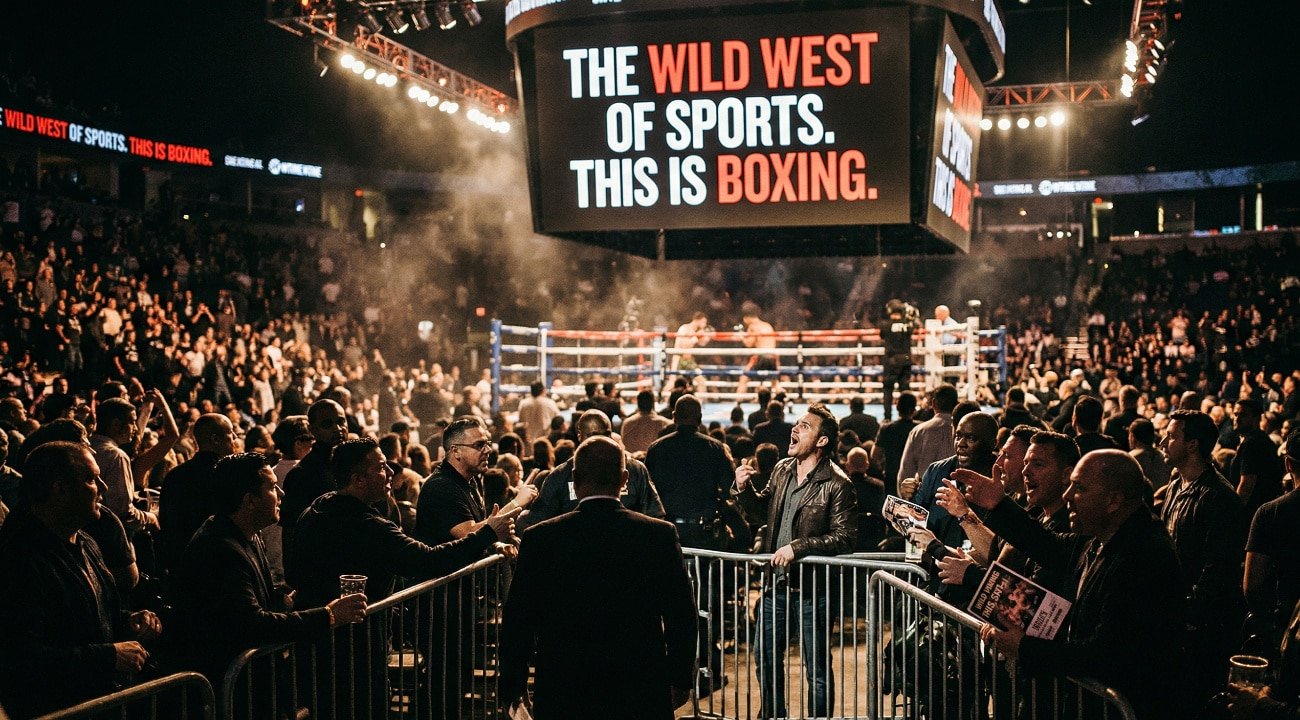


Simon Jordan’s take is refreshingly honest because it stops pretending boxing needs to be “fixed” to succeed. Most people look at the lack of a central commissioner or a unified ranking system as a failure, but he’s arguing that the friction is actually the engine.
The sport does not run on a clean league system or a fixed schedule that guarantees order. Titles move between sanctioning bodies. Fights fall apart and reappear. Rankings are argued over rather than accepted. It would be easy to see that as a flaw, but it is also why there is always another storyline waiting.
The lack of structure creates a unique kind of engagement that you don’t get in the NFL or NBA. In a league with a clear off-season, the conversation dies down. In boxing, the “disorder” means there is always a negotiation, a purse bid, or a sanctioning body fallout to talk about. The news cycle never stops.
Jordan is right that reputation is built in real-time. Without a playoff bracket, a fighter’s value is determined by the public’s interest and their willingness to take risks. It’s raw, and as he said, nothing feels guaranteed.
We spend as much time arguing about who should fight as we do watching the actual fights. That debate is part of the entertainment. If every number one fought every number two automatically, we’d lose the months of anticipation and “he’s ducking him” drama that fuels the sport’s popularity.
While the chaos keeps the sport alive, it’s a double-edged sword. The same “raw” environment that Jordan admires also leads to aging stars holding onto belts too long. We also see sanctioning fees draining fighters’ purses. The best fights often happening two years later than they should.
Ultimately, Jordan’s view is that boxing is a “survivor” sport. It doesn’t need a clean coat of paint or a corporate handbook because its appeal is built on the very instability that critics hate. It’s not a bug; it’s the main feature.
Read the full article here