




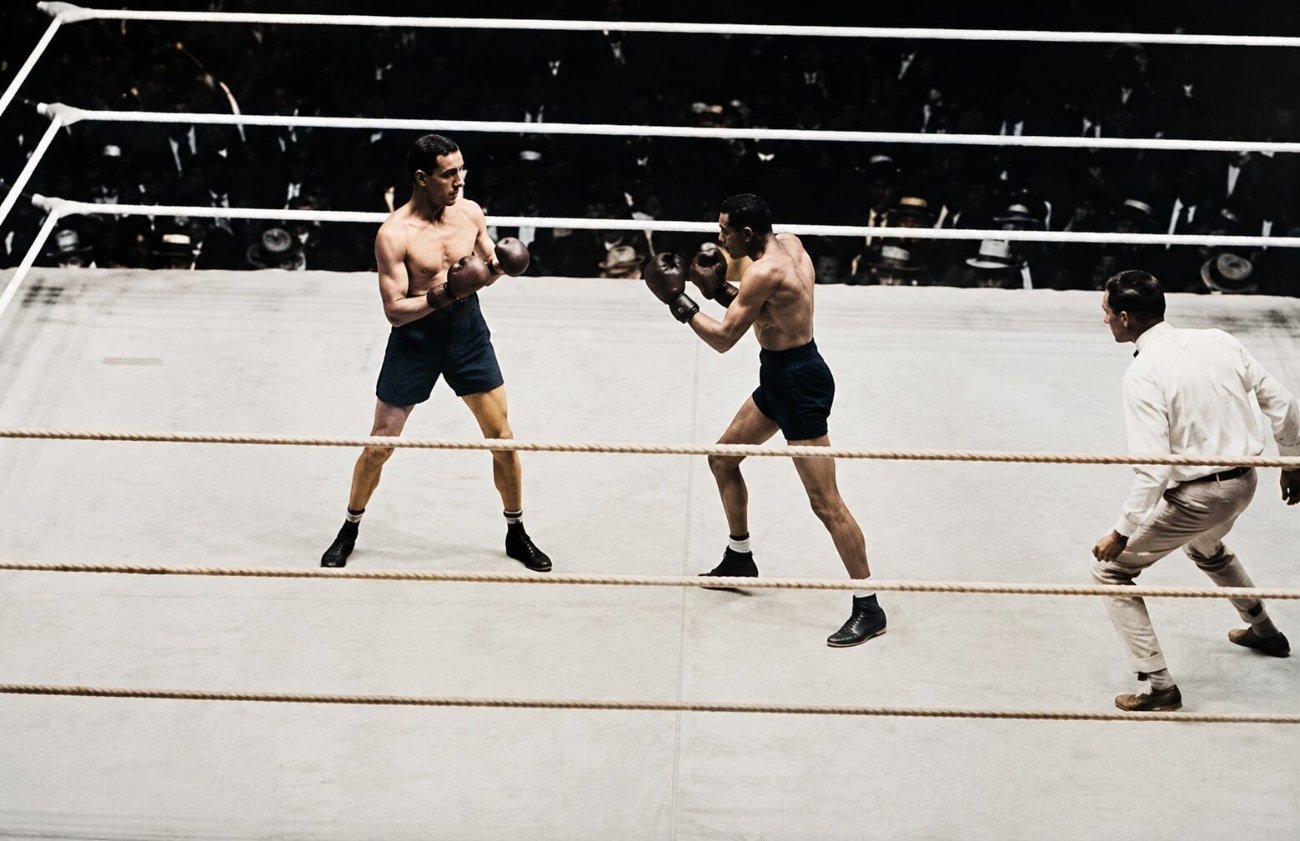


Leonard remained boxing’s dominant lightweight champion after nearly six years on the throne. Tendler arrived as the division’s leading challenger, a feared Philadelphia southpaw whose powerful left hand had pushed the champion harder than anyone during the first meeting. Leonard remained a heavy betting favorite, although many believed Tendler possessed the style capable of producing an upset.
Referee Andy Griffin supervised the championship contest. Billy McPartland and Charles F. Mathieson served as judges.
Leonard applied the lessons from their first meeting almost immediately. Having prepared for Tendler’s awkward southpaw style, the champion established his jab early, slipped the challenger’s powerful left hand with regularity, then answered with fast combinations that repeatedly found the target. Leonard’s footwork kept him in position to score. Tendler struggled to establish any sustained offense against the champion’s tactical approach.
Tendler enjoyed success during the early rounds but never gained lasting control of the fight. Most newspaper accounts awarded Leonard a comfortable lead as the rounds progressed, with several ringside scorecards crediting the champion with nearly every session. One contemporary report estimated Leonard landed roughly three punches for every one returned by the challenger.
Leonard widened his advantage during the closing rounds. In the 13th, he caught Tendler with a sharp combination that sent the challenger to the canvas or forced him down while trying to escape the attack, depending on the ringside account. Tendler rose and continued fighting, displaying tremendous courage despite absorbing heavy punishment through the remainder of the contest.
Leonard continued to score with clean punches throughout the closing rounds. Tendler had no answer as the champion steadily widened his lead before the scorecards were announced.
The official verdict awarded Leonard a unanimous 15-round decision, allowing him to retain the world lightweight championship in decisive fashion. Unlike their first meeting, virtually no disagreement followed the result.
Tendler accepted defeat with admirable sportsmanship after the final bell. He congratulated the champion, telling Leonard, “It’s all right, Benny. I don’t need a decision. You beat me tonight. You’re a better man than I am.”
The unanimous decision further strengthened Leonard’s legacy as one of boxing’s greatest lightweights. It also settled his rivalry with Tendler after two championship meetings. Tendler remained one of the finest fighters of his generation, yet his two opportunities to win the lightweight title came against a champion performing at the peak of his remarkable career.

Read the full article here