




Adrian Newey has revealed Aston Martin didn’t start its 2026 wind tunnel programme until mid-April 2025, which accounts for the team’s current setback.
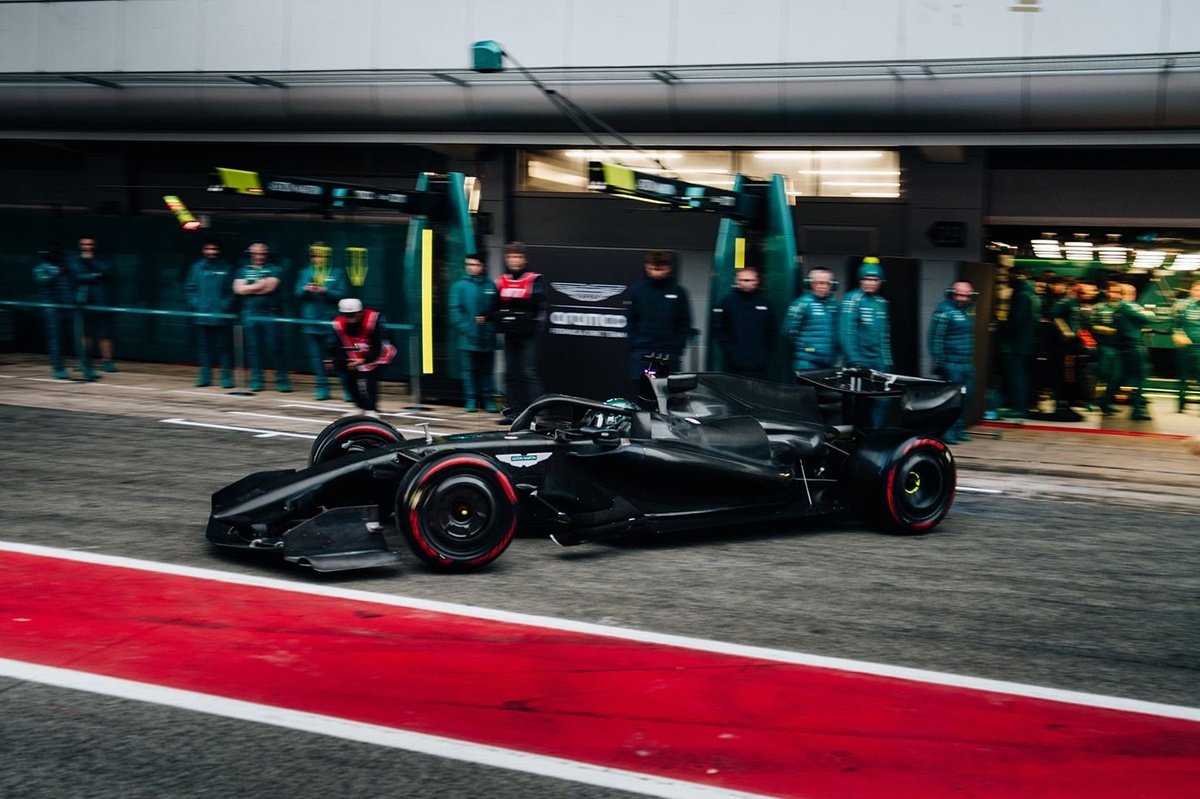
As Formula 1 held a five-day shakedown last week at Barcelona, where each team was allowed to run on three days, Aston completed just one full day of testing, on Friday, after covering a handful of laps on Thursday evening.
This required the new challenger to be flown from the team’s factory to the circuit – more precisely the nearest airports in Birmingham and Girona – in order to have any track time at all.
But Aston’s delay may originate from what happened 12 months ago at the outfit’s Silverstone campus.
F1 teams were banned from running any wind tunnel or CFD (Computational Fluid Dynamics) tests relative to 2026 machinery before 1 January 2025, keeping costs and resources under control amid the regulatory overhaul.
Yet, Aston Martin waited for its new wind tunnel to be fully operational, reveals team principal Newey – who joined the team on 1 March, initially as ‘managing technical partner’.
“2026 is probably the first time in the history of F1 that the power unit regulations and chassis regulations have changed at the same time. It’s a completely new set of rules, which is a big challenge for all the teams, but perhaps more so for us,” the legendary British designer said.
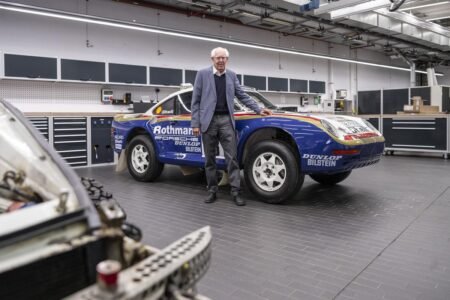
Adrian Newey, Managing Technical Partner of Aston Martin F1
Photo by: Zak Mauger / Motorsport Images via Getty Images
“The AMR Technology Campus is still evolving, the CoreWeave Wind Tunnel wasn’t on song until April, and I only joined the team last March, so we’ve started from behind, in truth. It’s been a very compressed timescale and an extremely busy 10 months.” Aston Martin previously announced on 13 March 2025 that its new wind tunnel was up and running.
“The reality is that we didn’t get a model of the ’26 car into the wind tunnel until mid-April, whereas most, if not all of our rivals would have had a model in the wind tunnel from the moment the 2026 aero testing ban ended at the beginning of January last year. That put us on the back foot by about four months, which has meant a very, very compressed research and design cycle. The car only came together at the last minute, which is why we were fighting to make it to the Barcelona shakedown.”
Like rival outfits, Aston Martin now faces a steep development curve with its new car.
“The AMR26 that races in Melbourne is going to be very different to the one people saw at the Barcelona shakedown, and the AMR26 that we finish the season with in Abu Dhabi is going to be very different to the one that we start the season with,” Newey added. “It’s very important to keep an open mind.”
We want to hear from you!
Let us know what you would like to see from us in the future.
Take our survey
– The Autosport.com Team
Read the full article here