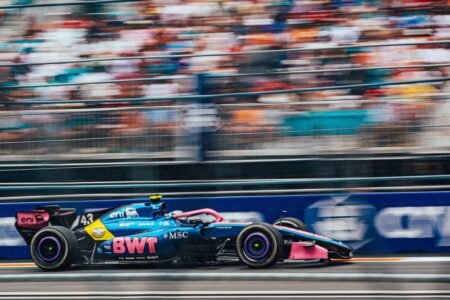





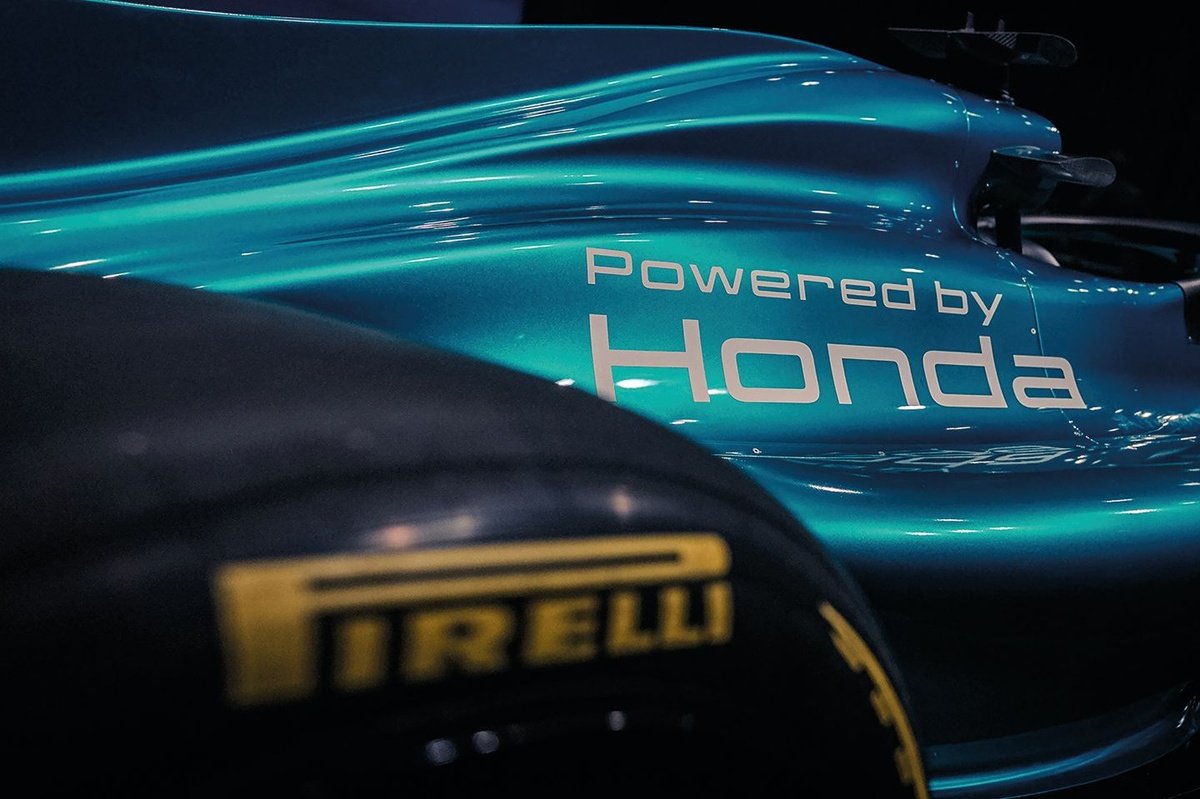
Honda has presented its worst financial report since the Japanese manufacturer was listed on the stock exchange in 1957. Honda Motor had already forecast a loss in March based on its financial predictions, and that picture was confirmed last Thursday with the official figures.
Over the financial year, which ended in March, Honda suffered a loss of 423billion yen ($2.68bn). These numbers are worse than during the pandemic years, when Honda decided to fully commit to electrification and officially withdrew from Formula 1 at the end of 2021.
Such a scenario is, at the moment, not threatening to repeat itself this time around. When asked by Autosport, the company stated that the financial figures will not affect Honda Racing Corporation (HRC) and therefore also not its F1 project.
“Honda Motor announced its financial forecast in March, ahead of Thursday’s formal announcement. The outlook has therefore been clear since that point,” the statement clarifies. “HRC does not recognize specific changes to Motorsport activities impacted by the financial announcement made on May 14.”
More interesting than the figures themselves is the background behind them. CEO Toshihiro Mibe stated during the announcement that the numbers are largely connected to the significant investment costs in EVs and the company’s electrification strategy.
Those investments have not paid off to the expected extent yet, particularly not in the United States. The latter is partly linked to the policy of the Trump administration. US buyers were eligible for up to $7,500 in tax credits when purchasing a new EV, but President Donald Trump scrapped that benefit in September 2025.
Honda’s financial results are leading to several strategic changes on the automotive side. First of all, Honda has suspended a planned $11bn investment to produce EVs and batteries in Canada.
Stefano Domenicali, Lawrence Stroll, Toshihiro Mibe Honda CEO, Koji Watanabe, HRC CEO
Photo by: Motorsport.com Japan
From an F1 perspective, it is perhaps more interesting that Honda is scrapping its earlier goal that one fifth of all new car sales in 2030 should be EVs. Mibe also confirmed that the target of selling only electric cars by 2040 has been abandoned for now.
More support in the F1 paddock for a V8?
These strategic updates from Honda are noteworthy in light of the current discussions in the F1 paddock. When the previous engine regulations were agreed, Audi and Honda were two of the strongest advocates of electrification, in line with their automotive strategy.
F1 CEO Stefano Domenicali acknowledged during a recent interview with Autosport that F1 and the FIA may have listened a bit too much to the OEMs at the time, but that there were few alternatives available. In his view, the world looks very different now.
“I definitely see, personally, but it’s up to the FIA of course to propose that, a sort of sustainable fuel at the centre of the future, with a different balance of what could be the electrification in the future with a strong internal combustion engine,” Domenicali said.
After Domenicali, FIA president Mohammed Ben Sulayem went one step further by telling Reuters and other media in Miami that a V8 “will definitely return”, this time powered by sustainable fuels.
“It’s coming. At the end of the day, it’s a matter of time. In 2031, the FIA will have the power to do it, without any votes from the PUMs. That’s the regulations. But we want to bring it one year earlier, which everyone now is asking for,” Ben Sulayem said.

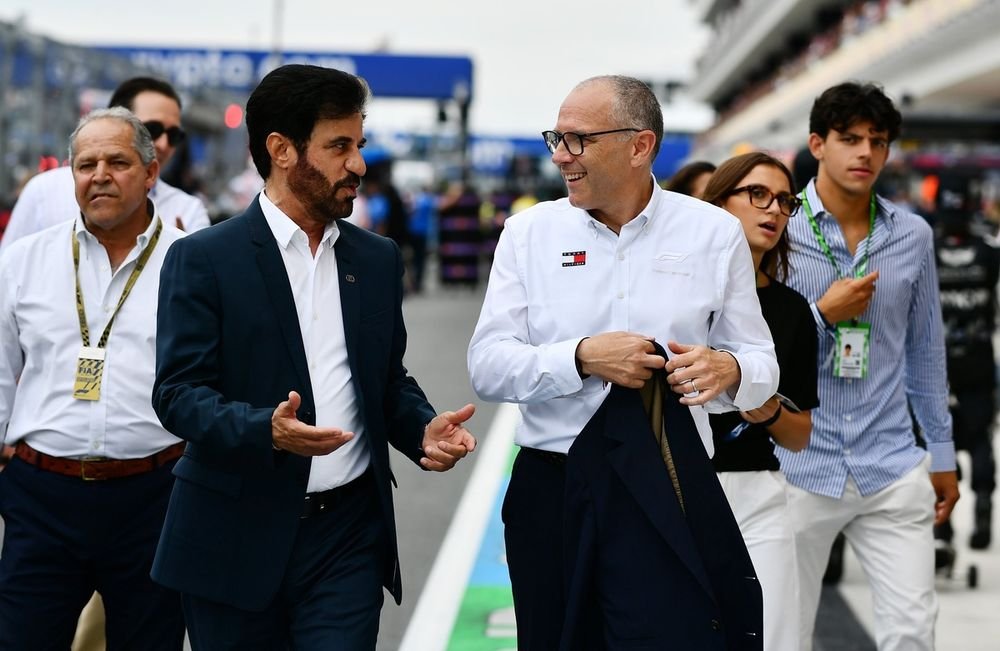
Mohammed ben Sulayem, FIA President and Stefano Domenicali, CEO of the Formula One Group
Photo by: James Sutton / LAT Images via Getty Images
So far, the idea of giving the internal combustion engine a more prominent role again in the next cycle has been received positively in the paddock, including current frontrunners Mercedes.
“From a Mercedes standpoint we are open to new engine regulations. We love V8s. From our perspective, it’s a pure Mercedes engine. Revs high,” Toto Wolff said.
However, the Mercedes boss did raise one important question: “How do we give it enough energy from the battery side to not lose connection to the real world? Because if we swing to 100% combustion [power], we might be looking a bit ridiculous in 2031 or 2030.
“So, we need to consider that, make it simpler and make it mega engineering. Maybe we can extract 800bhp of the ICE and put 400bhp on top of it in terms of electric energy. We are absolutely up for it, as long as those discussions happen in a structured way.”
Ford, Red Bull’s current engine partner, is also open to the idea of a V8. Ford Performance director Mark Rushbrook explained to Autosport that Ford had initially planned to stop producing road cars powered solely by a combustion engine, but has since reversed that decision.
That leaves Audi and Honda as the two biggest question marks in terms of support for such a move. But for the Japanese manufacturer at least, the strong focus on electrification has not delivered the desired financial results over the past year.
We want to hear from you!
Let us know what you would like to see from us in the future.
Take our survey
– The Autosport.com Team
Read the full article here